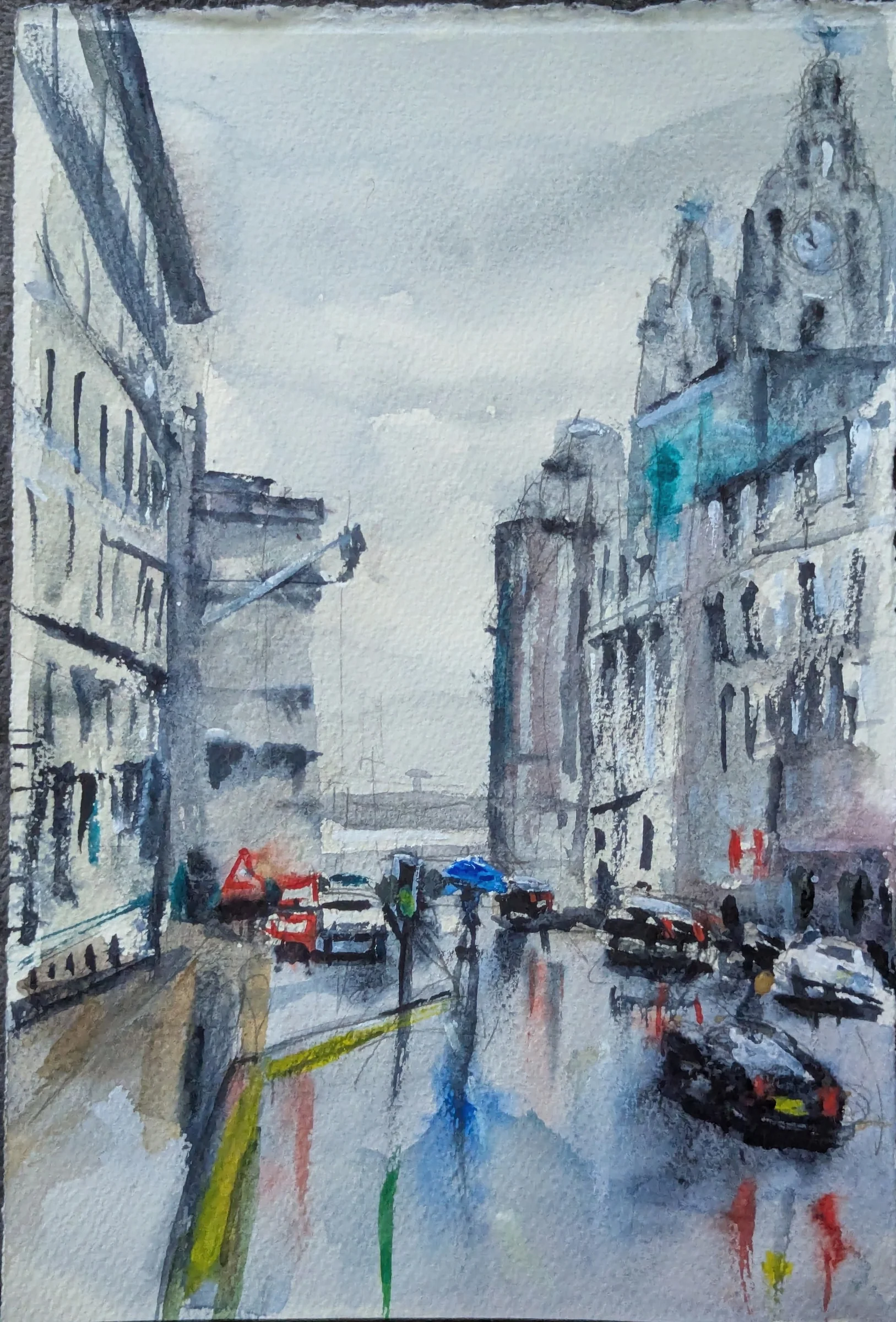
A starter box that can stay useful
An affordable paint is good value when it helps you paint freely, makes dependable mixtures and remains useful as your judgement develops. A low price alone cannot do that. Neither can an expensive label, although it can look very assured sitting beside an untouched sheet of paper.
ROSA Gallery is a strong candidate for an affordable artist-grade starting palette. Our pick here is the twelve-full-pan Urban Sketching tin for someone who wants to get outside with a compact, refillable box. This is a recommendation for a particular job, not a claim to have crowned the best paint in every country and currency. If you already have working colours, use the tests below before buying replacements.
Ukrainian materials, made for artists
ROSA is a Ukrainian art-materials company founded in 1996. Its own history dates the Gallery watercolour launch to 2018 and describes development with Ukrainian artists. This is a manufacturer with an established materials practice, not simply a fashionable name on an imported starter tin.
Keep the range names straight: Gallery is the professional watercolour range discussed here; Studio is a separate range aimed at learning and practice. The manufacturer describes Gallery paints as pigments bound with gum arabic. That tells us something about the material, but each colour still has its own transparency, staining, granulation and lightfastness characteristics. Read the current chart and the label on the paint you actually buy.

What makes the value convincing?
A full pan gives a larger brush a comfortable target. A refillable tin lets the colours you use most earn their space, rather than making you buy another complete set when the blue runs out. Tubes let you prepare a generous wash quickly and refill a familiar box. Those are practical benefits you can feel during a painting session.
Independent tests help put the claims in perspective. Kimberly Crick reports easy rewetting and strong colour, but also discusses weaker earth mixtures and colour-specific lightfastness concerns. Her page includes a year-long window test: useful comparative evidence from her samples, not a laboratory certification for every current batch. Lindsay Weirich’s self-purchased 2021 set review includes mixing charts and comments on rewetting and granulation. Follow both links below and look at the actual tests, not only the verdict.
Artist-grade is a range description, not a promise that every colour is transparent or permanent. If the painting is intended for long display, choose colours with suitable published lightfastness ratings and examine the pigment list. A convenient name can conceal a mixture; a single pigment can still have a property you do not want. There is no need to become a chemist before drawing a bus stop, but keeping the wrapper is remarkably effective research.
The Urban twelve: a useful box, not Mark’s custom twelve
The retailer’s Urban selection lists Titanium White, Cadmium Yellow Light, Bright Red, Magenta Rose, Green, Emerald Green, Cobalt Blue, Ultramarine, Yellow Ochre, Royal Brown, Sepia and Neutral Black. Check the current contents before ordering: other twelve-colour ROSA sets have different names and selections. This ready-made set does not reproduce Mark’s three-row palette.
Begin with six from the tin: the yellow, Bright Red, Magenta Rose, Ultramarine, Yellow Ochre and Royal Brown. Try a blue–brown shadow and an ochre-led wall, then test your yellow with Ultramarine for foliage. Add one of the greens only when it solves a particular problem. This is a proposed study palette, not a declaration that all six paints share the same properties.
Keep paper white for the brightest passages while learning transparent washes. The white pan can stay available for deliberate opaque marks; it does not need to go into every mixture. Likewise, compare a mixed dark with the ready-made black before deciding which suits the street. Twelve pans are twelve options, not a compulsory roll call.
Whole pans or tubes?
Choose the Urban full-pan tin if portability and a ready-made mixing box are the priority. Whole pans are a format, not a lower grade. Wet the surface, give it a moment and load enough paint for the passage; scrubbing frantically at a dry pan is not an advanced technique.
Choose tubes if you paint larger washes, work mostly at a table or already have a suitable palette to fill. The Classic set contains twelve 10 ml tubes, with a different colour selection from Urban. Budget for a mixing palette if you need one. The lowest purchase price does not make two differently equipped sets equivalent.
For refills, buy the colour that is actually running out. Do not divide tube millilitres by the apparent volume of a dry pan and call that a precise value comparison: wet paint, dried paint, pigment strength and the amount you use complicate the arithmetic. Compare the delivered cost of the colours you will paint with.
The UK price check: start here, then check the basket
Checked 25 October 2026. Among the named UK listings compared here, Bromleys had the lowest advertised item price for both the Urban twelve-full-pan tin (£24.68) and the Classic twelve × 10 ml tube set (£33.50). These are dated findings, not a permanent cheapest-price promise. No membership discounts or first-order codes are assumed.
For a UK mainland parcel, Bromleys publishes £4.50 delivery below £50: that gives indicative single-set totals of £29.18 and £38.00. Confirm the service in the basket; qualifying letterbox products have different terms. Cass Art’s standard UK £4.95 delivery makes its Urban tin £29.90. Postcode, stock and offers can change the result. Where delivery is not resolved below, the item price is not a delivered-price ranking.
| Product / seller | Item | Delivery / total |
|---|---|---|
| Urban · 12 full pans in tin Bromleys | £24.68 | Parcel estimate £4.50 → £29.18 |
| Urban · 12 full pans in tin Cass Art | £24.95 | Standard UK £4.95 → £29.90 |
| Urban · 12 full pans in tin Crafty Arts | £25.00 | Delivery calculated at checkout |
| Urban · 12 full pans in tin Jackson’s | £25.50 | Delivery calculated at checkout |
| Classic · 12 × 10 ml tubes Bromleys | £33.50 | Parcel estimate £4.50 → £38.00 |
| Classic · 12 × 10 ml tubes Crafty Arts | £39.00 | Delivery calculated at checkout |
| Classic · 12 × 10 ml tubes The Art Trading Company | £42.95 | Delivery calculated at checkout |
Individual refills: do the postage arithmetic
The lowest checked advertised refill examples were at Jackson’s: £2.12 for a full pan of Mars Brown and £3.23 for a 10 ml tube of Carmine, both listed in stock. These are price examples, not recommendations to buy those particular pigments. Stock varies by colour; the same sale list showed some colours awaiting stock.
The Art Shops listed full pans at £2.64 and 10 ml tubes at £3.53; The Art Trading Company listed £3.35 and £4.45 respectively. Check your exact colour and delivery before calling one cheaper. A single pan plus postage can cost more than buying it locally, and adding paints you do not need to reach free delivery is an oddly elaborate way to save money.
| Product / seller | Item | Delivery / total |
|---|---|---|
| Full pan · Mars Brown example Jackson’s | £2.12 | Plus delivery; in-stock example |
| 10 ml tube · Carmine example Jackson’s | £3.23 | Plus delivery; in-stock example |
| Individual full pans / 10 ml tubes The Art Shops | £2.64 / £3.53 | Plus delivery; colour availability varies |
Spend the remaining money where it helps
A small selection of useful paints, a sound round brush and paper you understand are a better starting kit than a huge box that leaves no budget for practice. Try cotton watercolour paper in a modest size if your present paper is making washes unpredictable. Mark uses Baohong rough 300 gsm; your comparison is most useful when you keep the paper constant while changing the paint.
Moving up can bring stronger colour, a more useful pigment choice or handling you prefer. It does not erase the work learned with simpler materials. Keep a good older colour until it runs out, then replace it for a reason you can name. The painting does not check whether every tube has the same logo.
Read the reviews with a brush nearby
Kimberly Crick’s written review is useful for pigment-level questions and her lightfastness experiment. Lindsay Weirich’s accompanying post includes her own charts and the set she tested; it uses affiliate links and its old US prices are not this article’s UK buying comparison. Logan’s Idyll Sketching review describes an individually chosen selection, useful when thinking about refills rather than a fixed set.
The films below are reviews of Gallery paints and particular sets, not proof that every current Urban colour behaves identically. Watch the swatches, the strength of the wash and what happens on drying. Then ask your own paints the same questions. A review should shorten the route to painting, not become another evening of watching someone else open boxes.
Watch, look again, then paint.
Two independent Gallery reviews: Kimberly Crick’s swatch-and-paint overview and Lindsay Weirich’s set review. Their tested selections differ from the current Urban tin. Use the films to plan your own tests; current UK prices are in the dated comparison above.
ROSA GALLERY WATERCOLOR REVIEW Professional Art Supply Painting Set Ronald's Ukraine Swatch + Demo
From Kimberly Crick Art · Watercolour materials review
A first-person swatch and painting overview, linked from Crick’s longer written review.
Watch with a question: How does paint strength change as water is added, and which colour needs a lighter touch?
After watching: Make three dilution steps with one familiar paint and one you are testing.
Open on YouTube ↗Can Paint This Cheap Be Any Good? (Rosa Gallery Watercolor Review)
From thefrugalcrafter Lindsay Weirich · Watercolour materials review
A self-purchased twelve-colour set review with accompanying mixing charts on Weirich’s blog.
Watch with a question: Which pairings are useful for your subjects, rather than merely attractive in a chart?
After watching: Paint three two-colour mixtures for the same street: wall, shadow and foliage.
Open on YouTube ↗YouTube supplies the thumbnails. A player loads when you select a film; starting another removes the previous player. Use the direct link if playback is restricted.
One street, six colours, four honest tests
- Choose a small street corner with a pale sky, a warm wall, a dark doorway and a little foliage. Draw a three-value thumbnail first.
- On your usual paper, test the six selected paints in a strong-to-pale wash. Paint a second stroke across a dry waterproof black line to compare covering behaviour. Label each actual pigment.
- Mix a blue–brown shadow, a wall colour and a green. Let the swatches dry. Record what changed and which mixture needs less of the stronger paint.
- Paint the corner with those six colours, saving paper white. Leave details until the large washes and shadow connect.
- Repeat one troublesome passage with a paint you already know. Keep brush, paper and target value similar. Write one sentence about what the different paint improves, and one about what it does not.
Make this a study of your own subject. These are our practice prompts, not a claim to reproduce an artist’s exact method.
Take a practice sheet →Keep looking
- ROSA: Ukrainian company history
- ROSA: Gallery and Studio watercolour ranges
- ROSA: current Gallery colour chart
- Kimberly Crick: review and one-year lightfastness test
- Lindsay Weirich: review, mixing charts and disclosure
- Idyll Sketching: an open-stock Gallery review
- Bromleys: delivery thresholds and services
- Cass Art: UK delivery prices
- Mark’s custom twelve: a different selection
Sources support the factual context; looking notes and exercises are Watercolourist editorial interpretation.
What happened on your paper?
A study, a discovery, or a wash with a mind of its own. Share your painting, ask a question or show what happened when you tried an exercise. Tell us if you would like critique.
Sign in or join to post under your username. Your contribution appears in the studio discussion with a link back here. See what other painters are discussing →