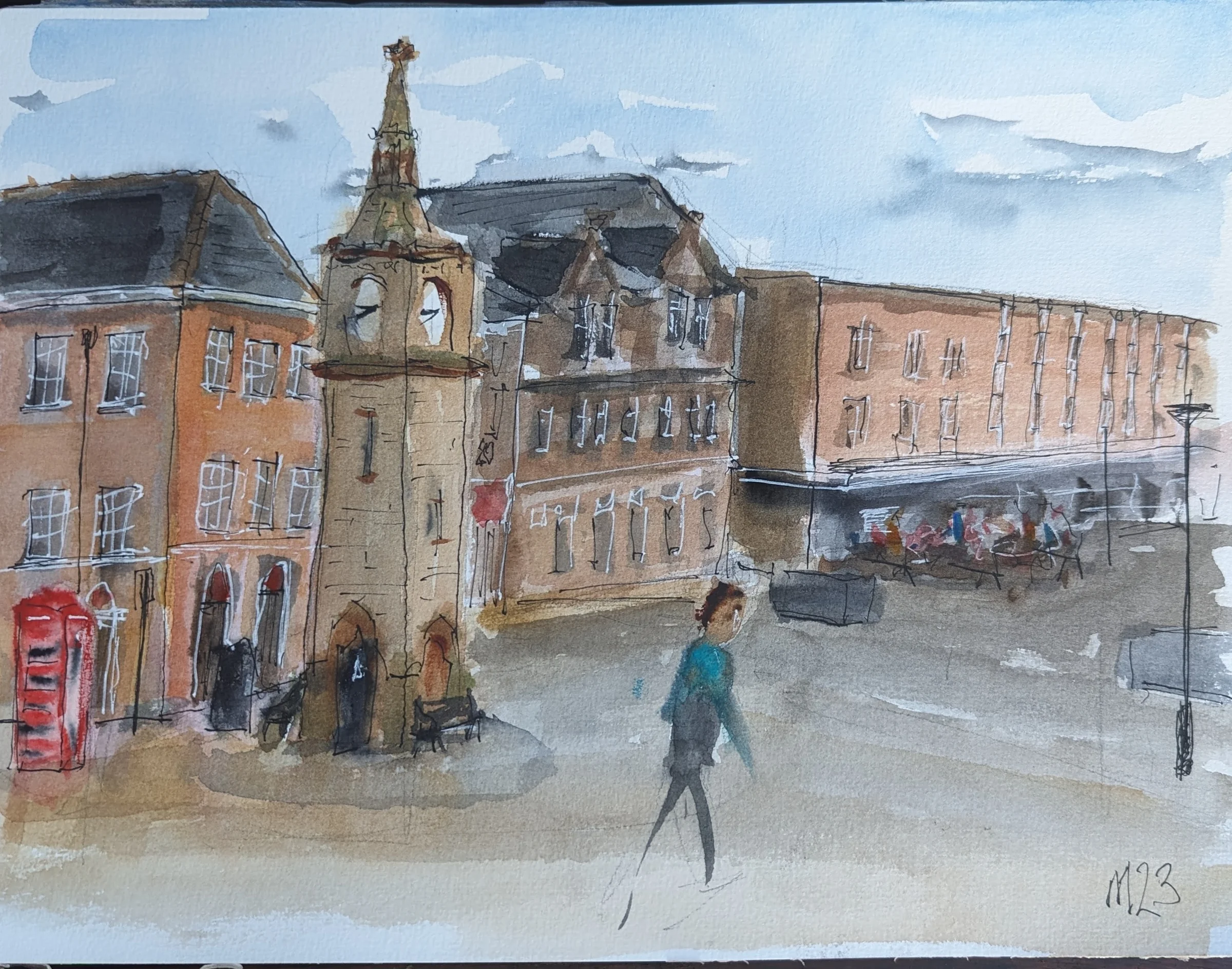
Pull up a chair. Mind the water jar.
Watercolourist is a place for people who like looking at paintings and getting some paint down themselves. There is usually a question on the table: how did that edge happen, why does that grey sing, and would the painting have been finished twenty minutes ago if we had left it alone?
Published by Mark C Grant, an artist working around Liverpool and Ormskirk, the zine grows out of the ordinary business of making art. Streets, bookshops, weather, a useful sketch, a less useful sketch. The kettle does a respectable amount of supporting work.
Good work to look at. Something to try.
The international gallery takes us into different places, periods and ways of painting. Spend time with a whole picture, look at the small decisions, then follow its history back to the museum or collection. The reading room follows those conversations into books, films and music. An idea for a painting can arrive from a rather unexpected direction.
At the painting table, we turn looking into doing: washes, materials, colour mixtures, composition and exercises small enough to fit into a real day. The classroom gathers lessons to watch with a brush nearby. Reading about a wash is useful. Eventually, though, somebody has to wet the paper.
What is in Mark’s bag?
A green Escoda travel set of three brushes, a Rosemary & Co travel rigger and flat, and Baohong rough 300 gsm paper. The paint box has a working core of twelve colours, with three optional extras. The interest is in what these materials let a painting do: transparent colour, direct marks, lively edges and room for the process to show.
Explore the working palette and the journey through material grades. Equipment earns its place by being useful. It does not get a chair merely because it came in a handsome box.
Bring your painting to the table.
The studio discussion is for sharing work, asking questions and comparing discoveries. Tell us what you were trying to do, where it went sideways, or what surprised you. A small study and a good question can start a much better conversation than a polished performance.
Look carefully and be generous. If someone asks for a critique, talk about the painting: the shape, the colour, the place your eye goes. There is plenty to disagree about without taking the person apart.
Follow the work.
Paintings carry their artists’ names and collection links, and articles offer sources for further looking. Start with the picture, follow what catches your attention, and come back with another question.
You can explore Mark’s paintings, visit his main studio, or get in touch. Spotted a muddled date or an unhelpful link? Leave a note in the studio discussion and tell us where to look.