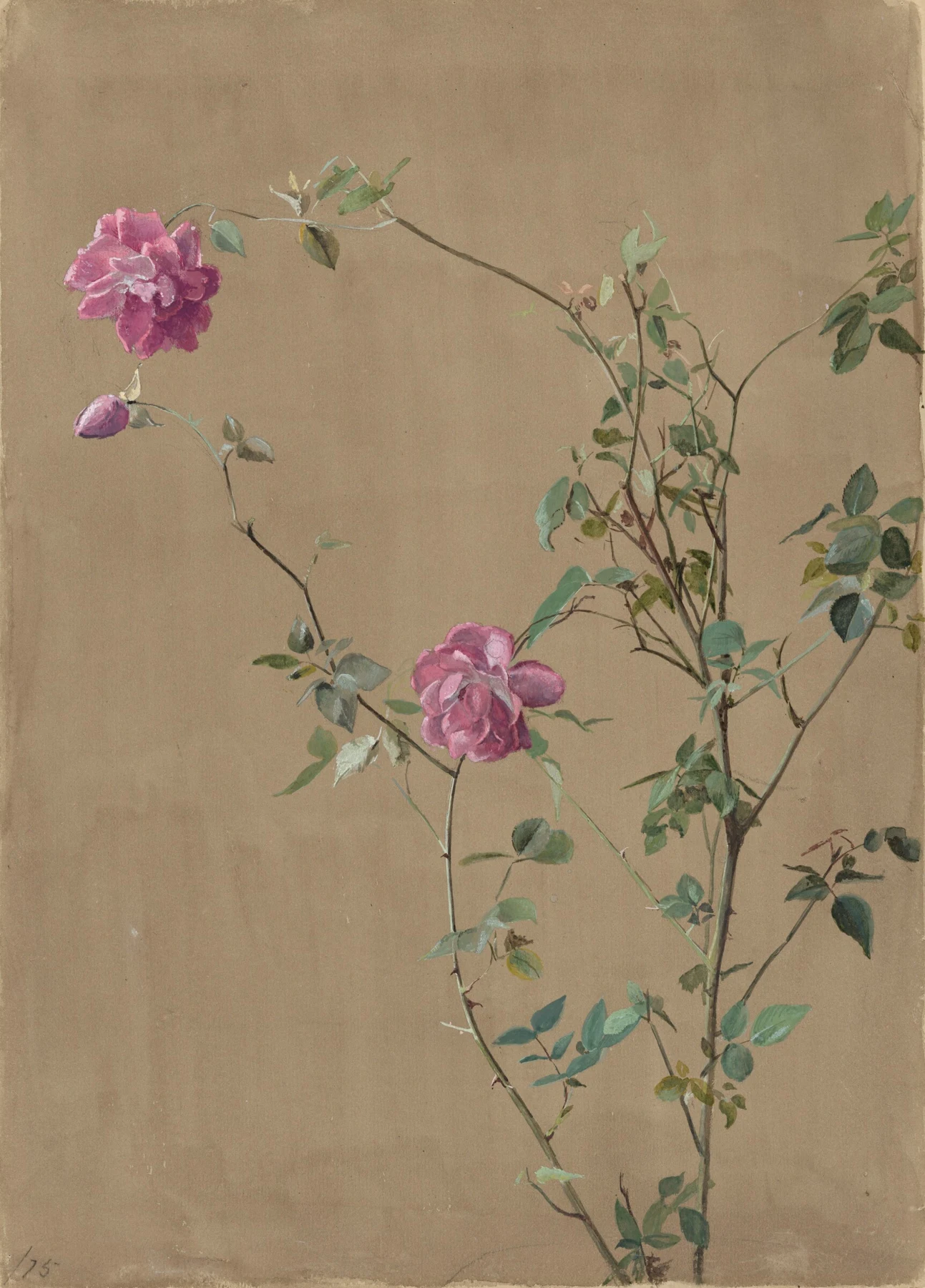
Fidelia Bridges · Pink Roses, 1875
Fidelia Bridges: stems, leaves and the spaces between
Two flower paintings, two arrangements: follow a rose stem across an open sheet, then look at foliage gathered in a jug.
Look closely
A profile should leave you with something to notice, and something to try. Study an artist’s decisions, then go and make your own.
Fidelia Bridges · Pink Roses, 1875
Two flower paintings, two arrangements: follow a rose stem across an open sheet, then look at foliage gathered in a jug.
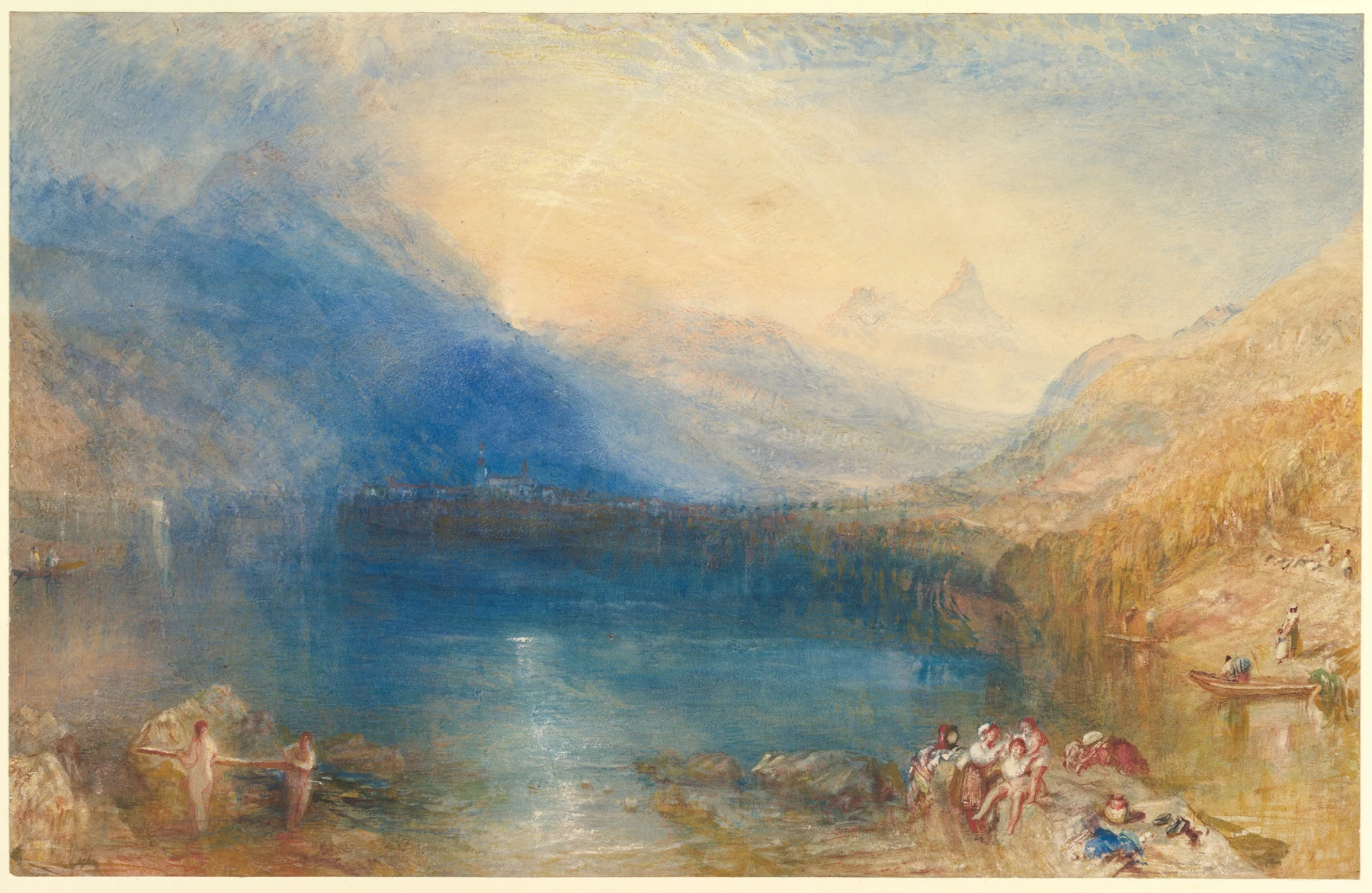
Joseph Mallord William Turner · The Lake of Zug, 1843
From the discipline of drawing to the radiance of the late Swiss lakes: four paintings, a lifetime of looking, and why Turner still matters at the watercolour table.
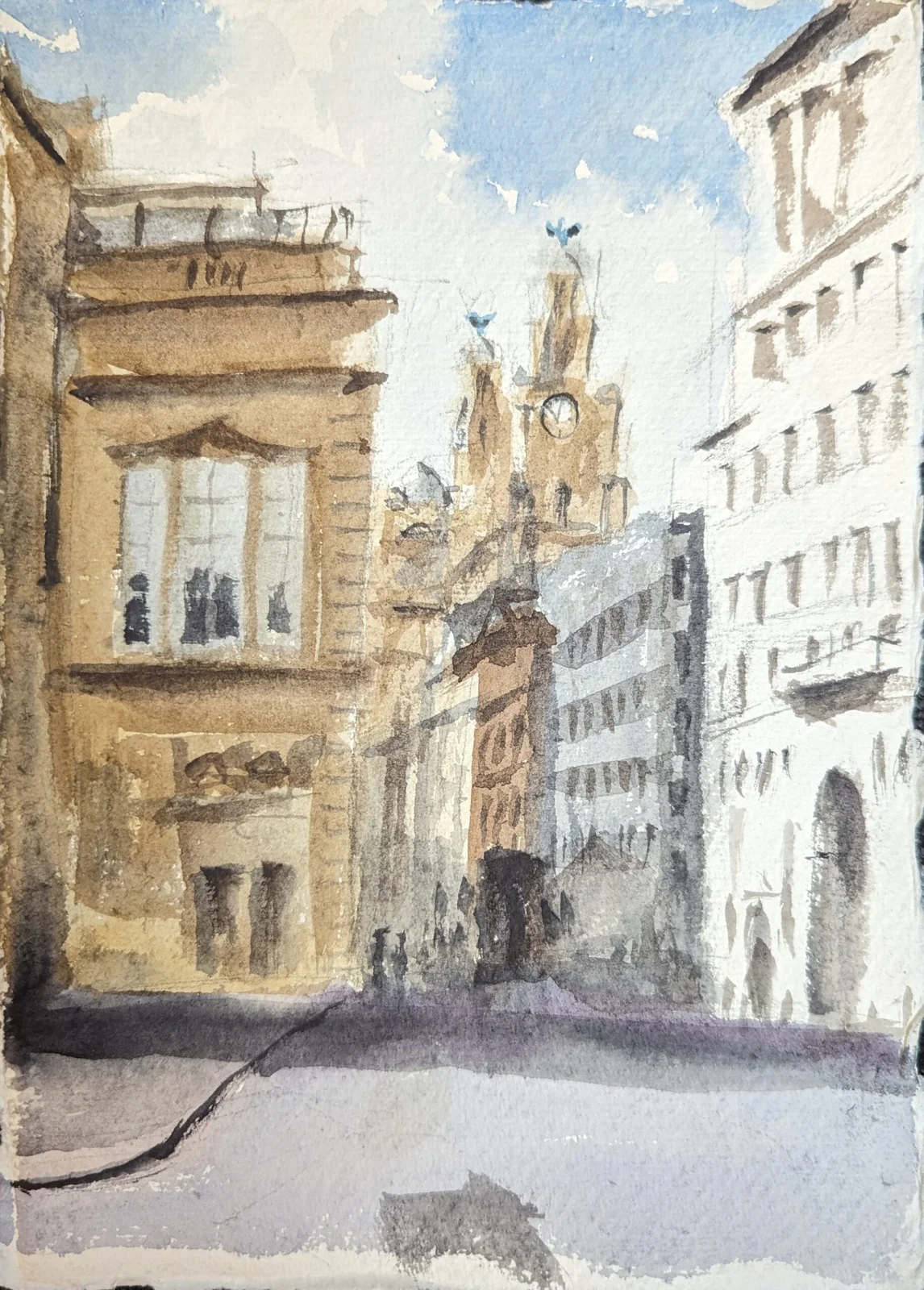
Water Street, Liverpool · Mark C Grant
Before another window, decide what the whole scene is doing. A practical way into atmosphere, tonal structure and a calmer relationship with street furniture.
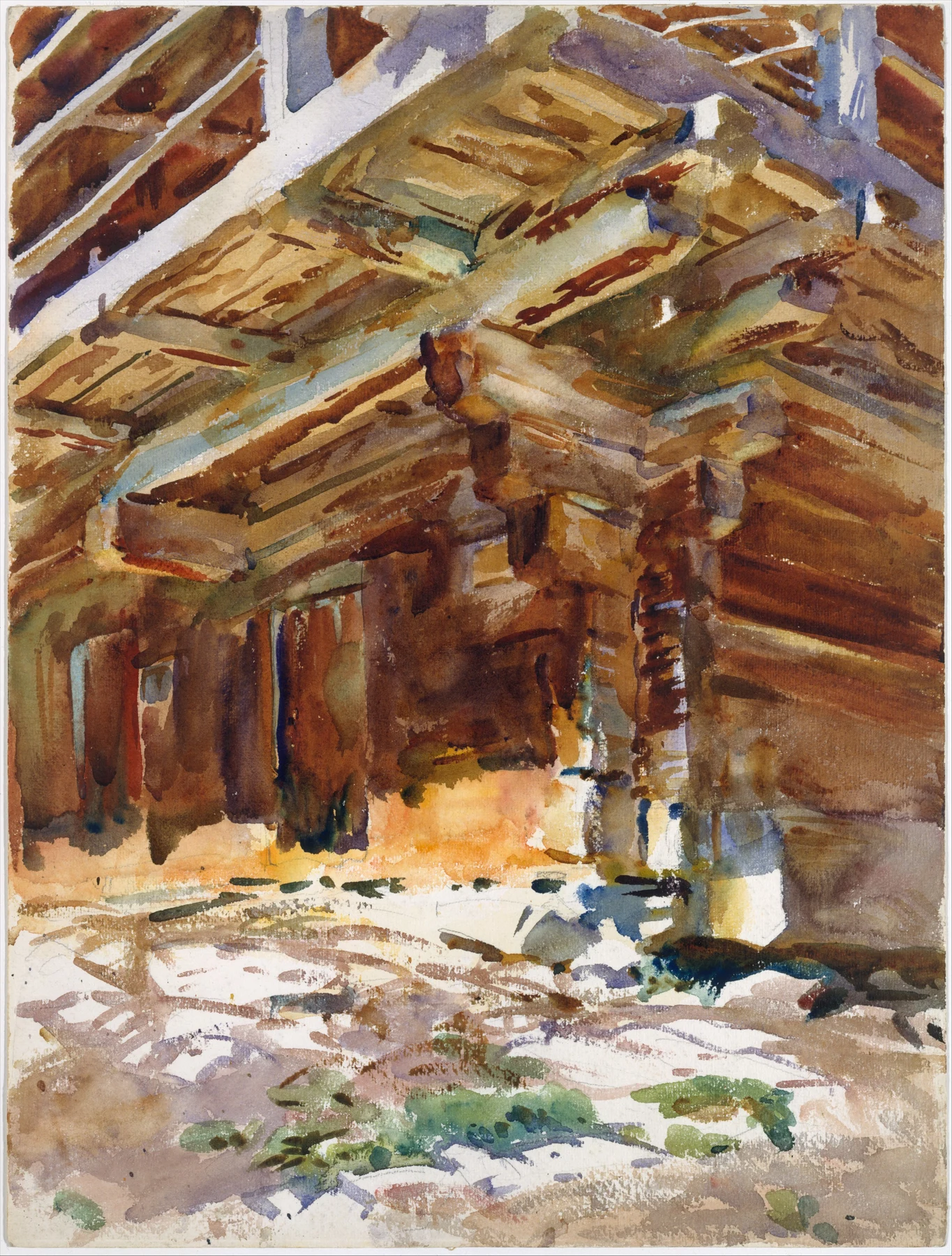
John Singer Sargent · Abriès, ca. 1912
The pleasure of a decisive mark starts before it touches the paper. Look at Abriès for a lesson in cropping, connected shapes and knowing where to spend your attention.
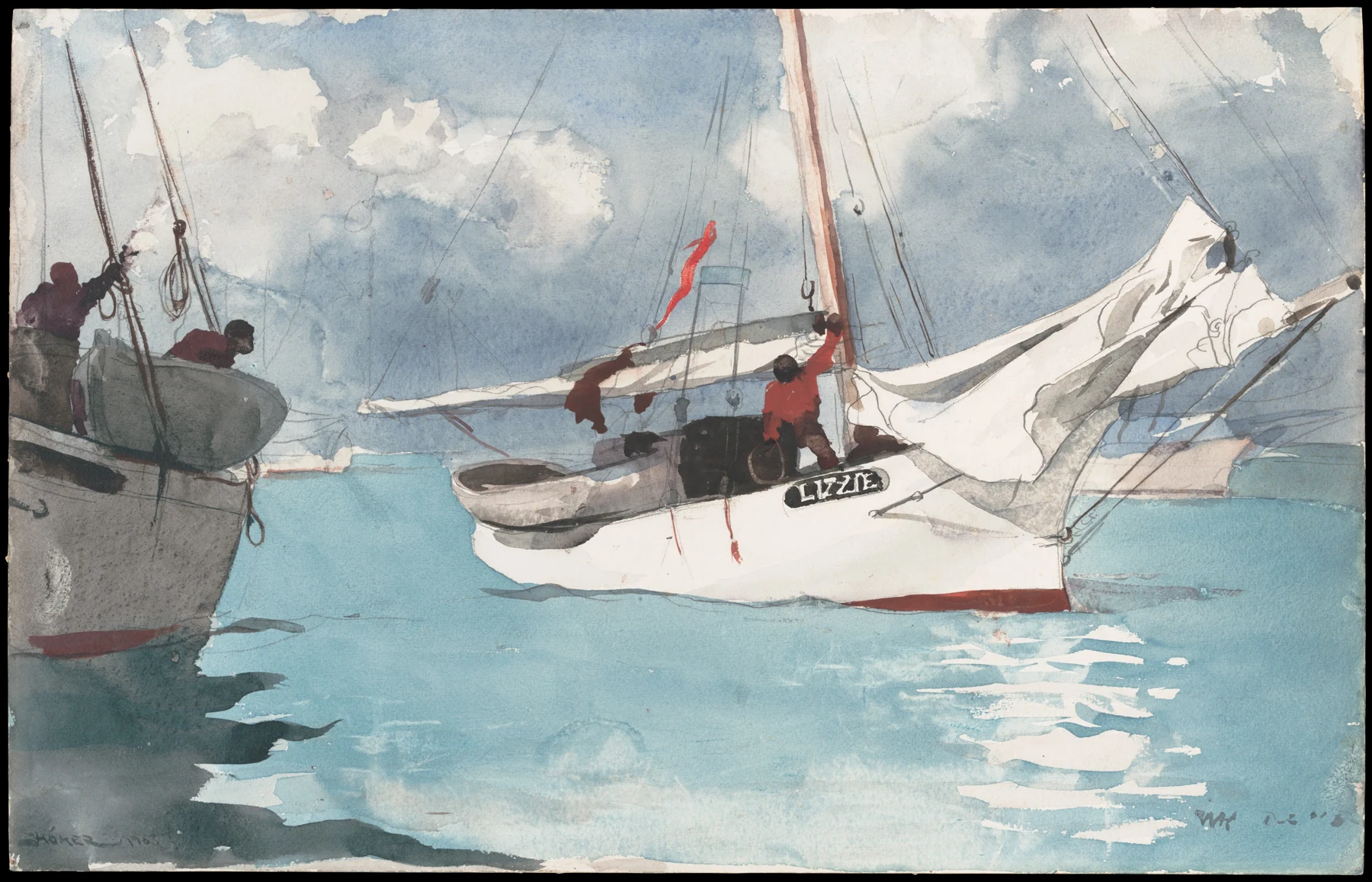
Winslow Homer · Fishing Boats, Key West, 1903
Fishing Boats, Key West is a marvellous excuse to leave something alone. Plan your light, connect your darks and stop explaining every ripple.
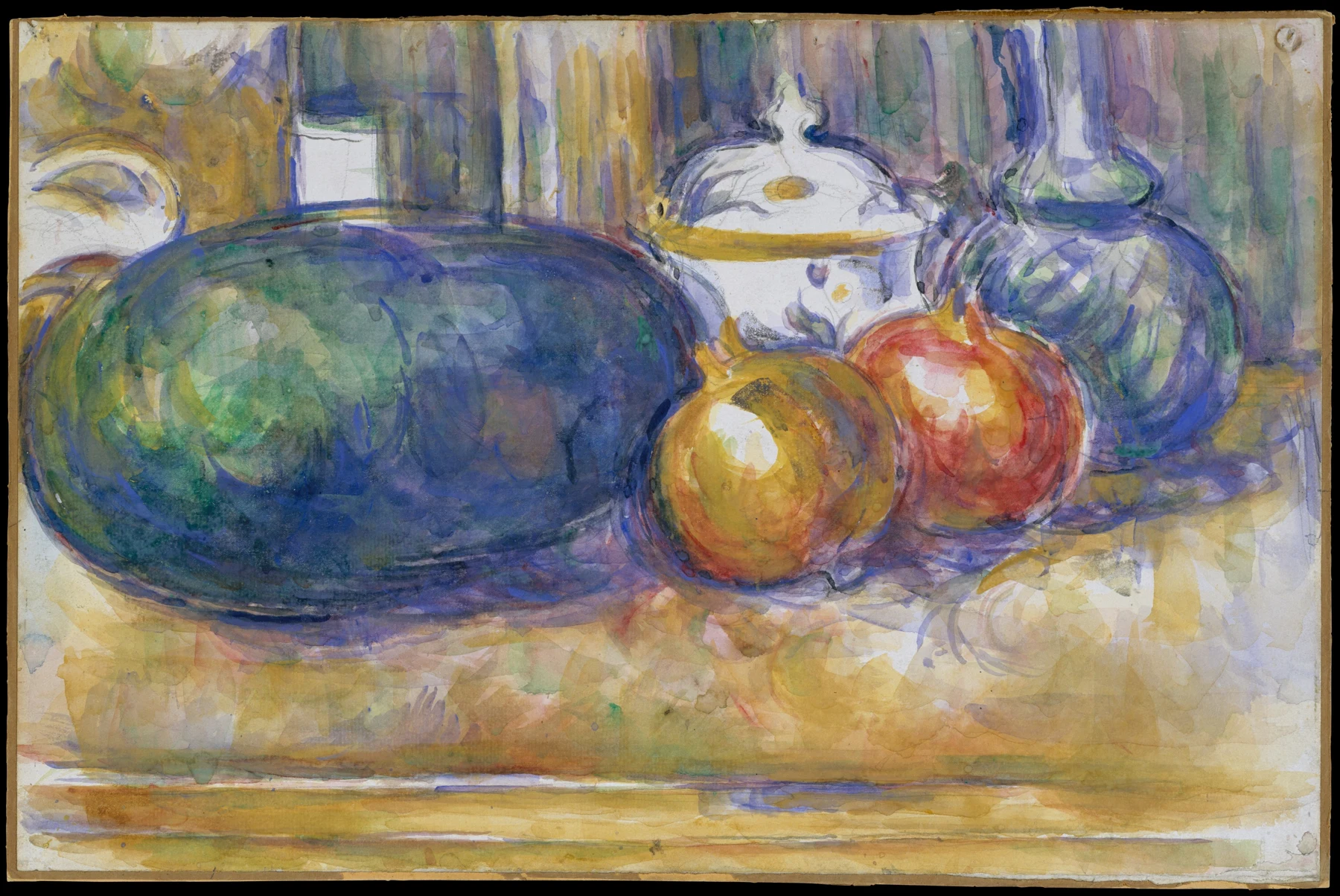
Paul Cézanne · Still-Life with a Watermelon and Pomegranates, 1900–1906
A fruit bowl becomes a small architectural problem. Learn to see colour relationships, leave breathing space and stop polishing every brushmark into submission.
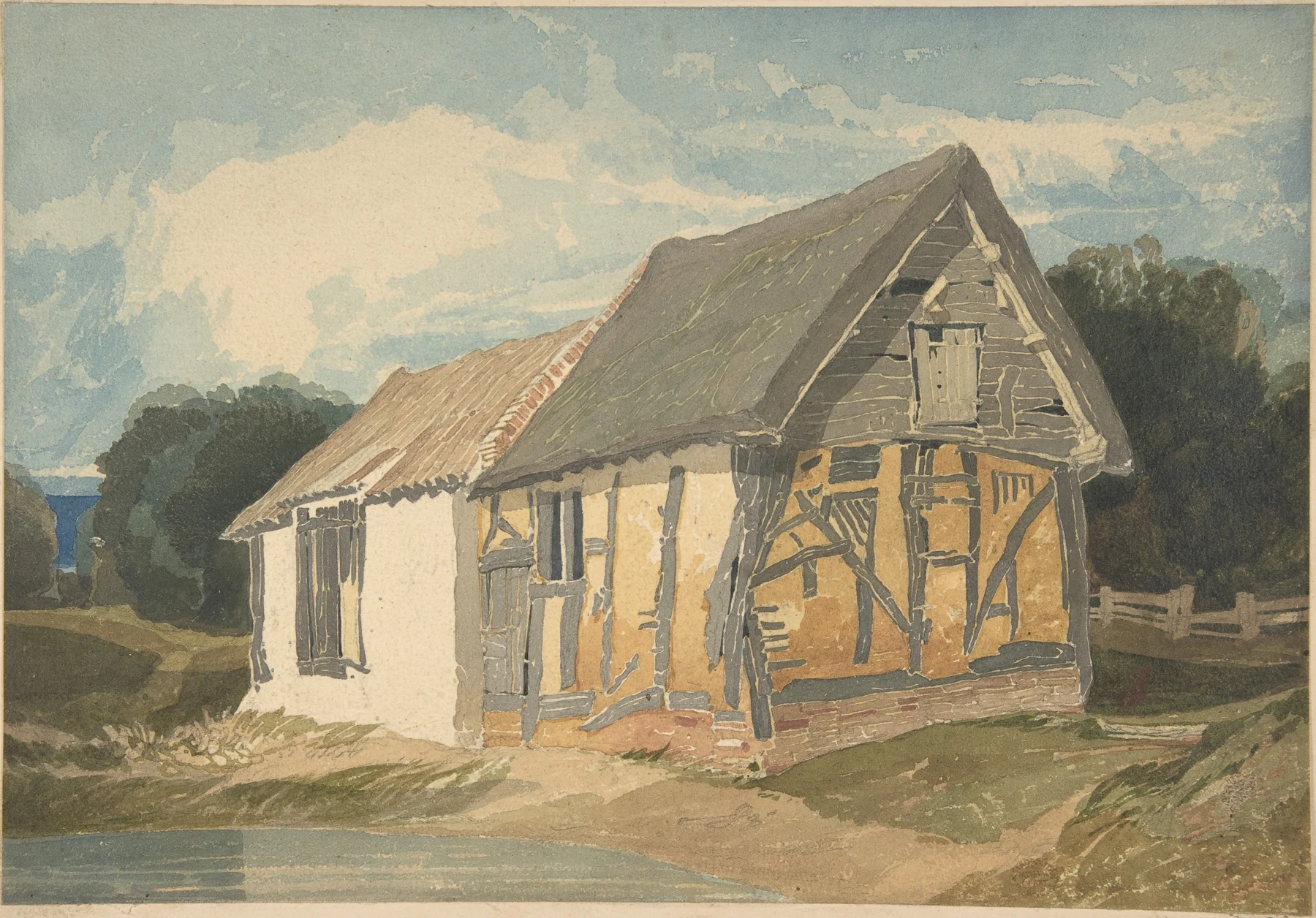
John Sell Cotman · Farm Building by a Pond, 1808–11(?)
A modest farm building, a stormy sea and the same useful question: what holds this picture together before the small brush gets involved?