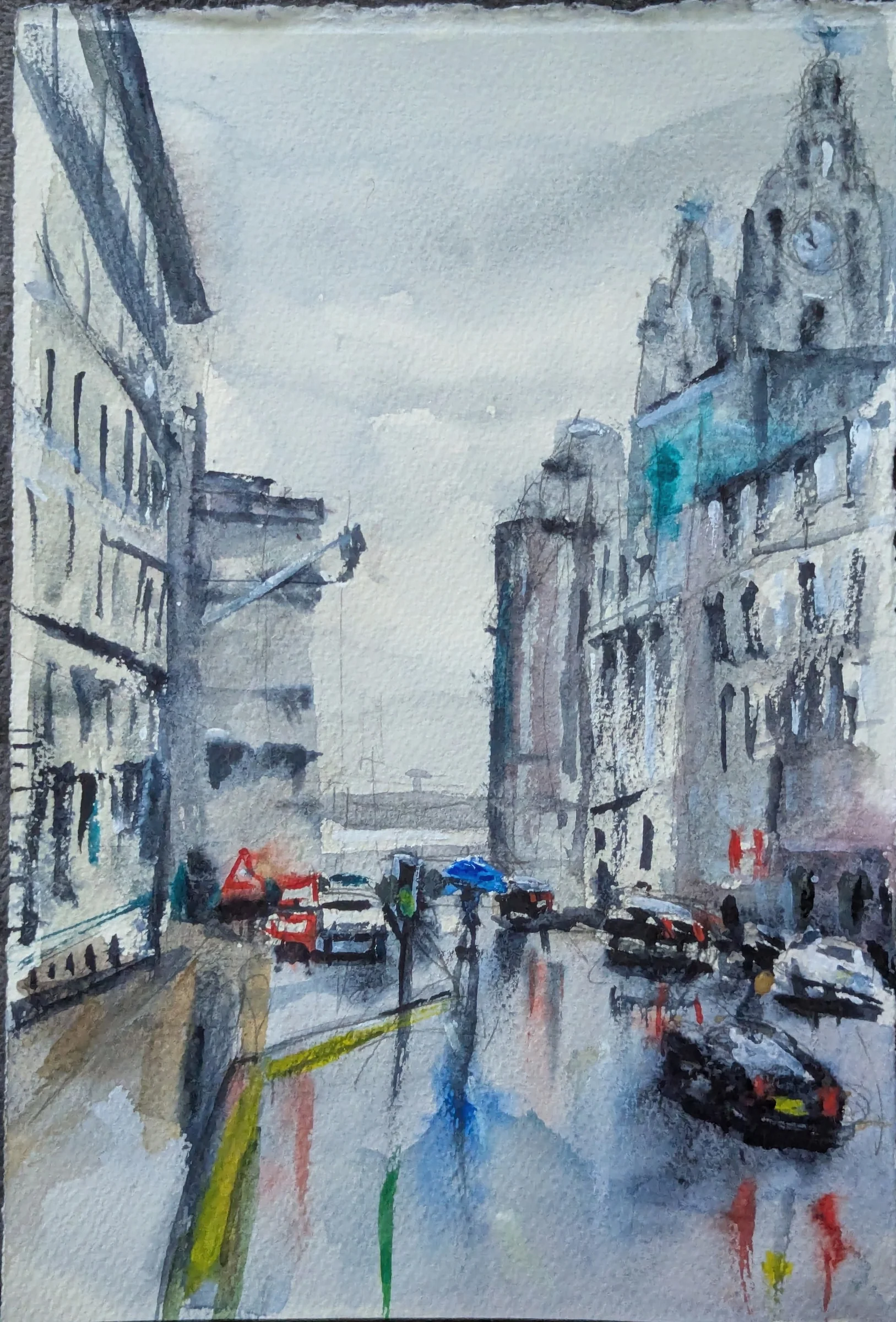
Look alongside this article: Joseph Zbukvic’s official portfolio. His paintings are not reproduced here.
A useful starting point
Joseph Zbukvic's own account of his work centres on the relationship between tonal values, design, colour and mood. His official site also says that most of his paintings are completed on location. Those are useful starting points for study: look at the overall organisation, then consider how an observed place becomes a painting rather than a record of everything standing in it.
The Twenty Melbourne Painters Society records his move from Croatia to Australia in 1970, his industrial design diploma in 1974 and his move into full-time painting in 1978. Biography supplies context, but the best reason to open his portfolio is to spend time looking. Leave the brush in the jar for five minutes. It will cope.
Give yourself a looking job
Open a painting on his official website and make three tiny boxes in your sketchbook. In the first, mark only the largest pale area. In the second, group the middle tones. In the third, locate the deepest darks. These are prompts for your own observation, not a claim that every Zbukvic painting follows the same formula.
Then ask where your eye arrives first and where it travels next. Which edges can you see clearly? Which boundaries are hard to separate? Where has a small warm or cool note attracted attention? Write down what you actually find. Describing a particular painting is much more useful than writing 'lovely loose atmosphere' and rewarding yourself with another brush.
Take the question to your own street
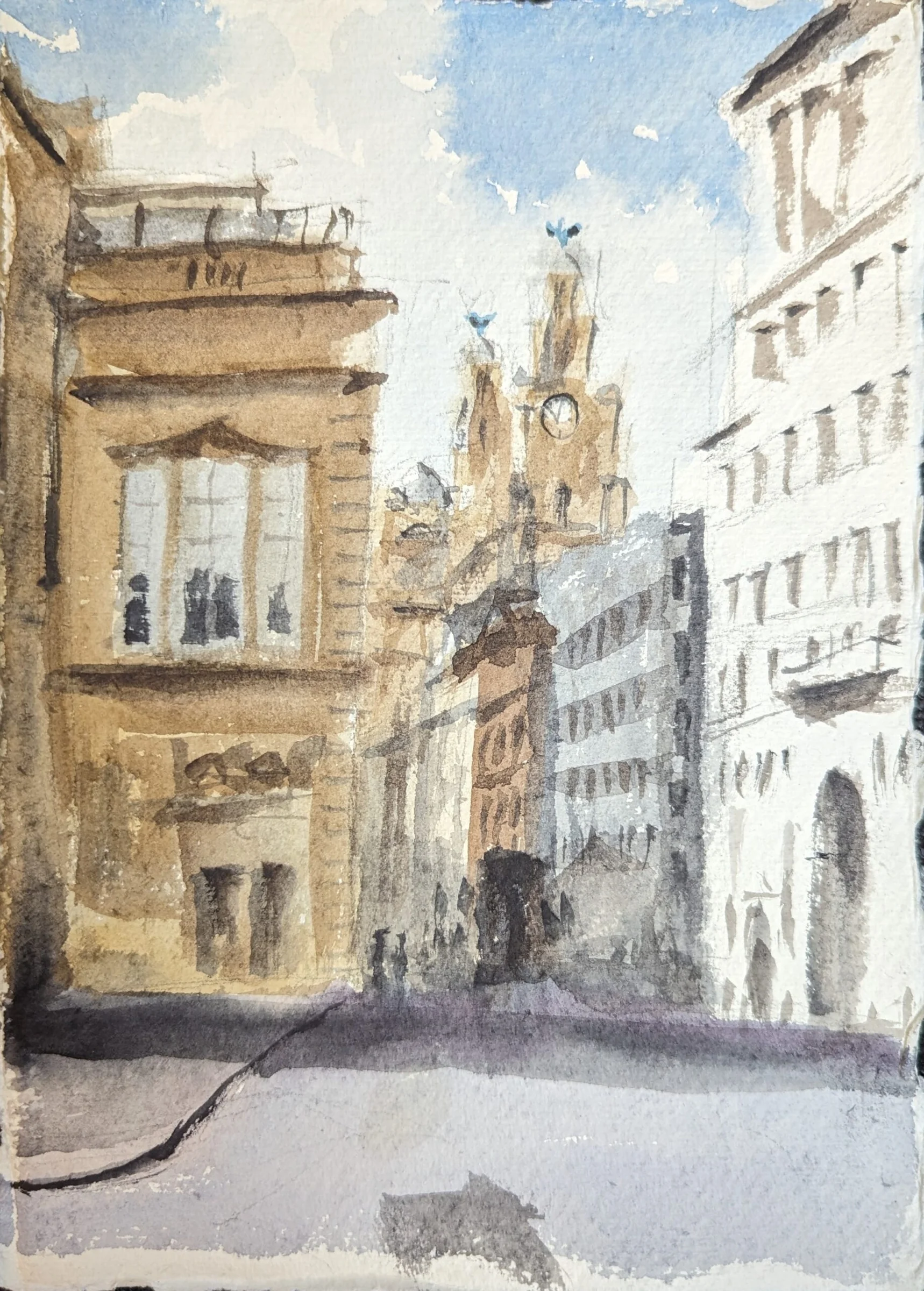
Choose your own photograph or a familiar outdoor view. Before drawing the buildings, describe the mood in a short phrase: pale morning, wet pavement, heavy afternoon shade. That phrase becomes a practical editing tool. A detail belongs if it strengthens the light, scale or rhythm you selected. A beautifully observed drainpipe may still have to wait for its solo exhibition.
Make a small monochrome plan with three broad value groups. Link neighbouring shadow shapes where they genuinely join in your reference. Keep the light area readable. Place one or two people only if they help the scale or focus; don't add figures as an automatic finishing sprinkle. This is our studio exercise about selection and value, inspired by the questions Zbukvic's stated priorities raise.
Let timing become something you can observe
Alongside the painting, keep a strip of the same paper. Try one mark while the strip is wet, another when the surface sheen has faded, and a third when it is fully dry. Label the results. You now have evidence from your room, your brush and your water load. Timings from someone else's demonstration cannot account for your radiator having theatrical ambitions.
Finish by comparing the study with your original mood phrase. If the picture feels busy, try a second version with fewer separate shadow shapes. If it feels flat, reserve a more decisive dark for the focal area. Study the artist's work to sharpen your judgement, and use his own teaching for his methods. Your aim here is a clearer response to your subject, with enough room for your own handwriting to appear.
One street, three value groups — an editorial study
- Choose your own street reference and write a short mood phrase.
- Make a three-value thumbnail before drawing any windows.
- Paint a small monochrome version, joining related shadow shapes.
- Compare it with your mood phrase and write one change for a second attempt.
Make this a study of your own subject. These are our practice prompts, not a claim to reproduce an artist’s exact method.
Take a practice sheet →Keep looking
- Joseph Zbukvic: the artist's account of his practice
- Joseph Zbukvic: official paintings portfolio
- Twenty Melbourne Painters Society: Joseph Zbukvic biography
Sources support the factual context; looking notes and exercises are Watercolourist editorial interpretation.
What happened on your paper?
One useful observation beats “lovely work”. Show a study, ask about a decision, or tell us where you disagree.
Join the studio discussion