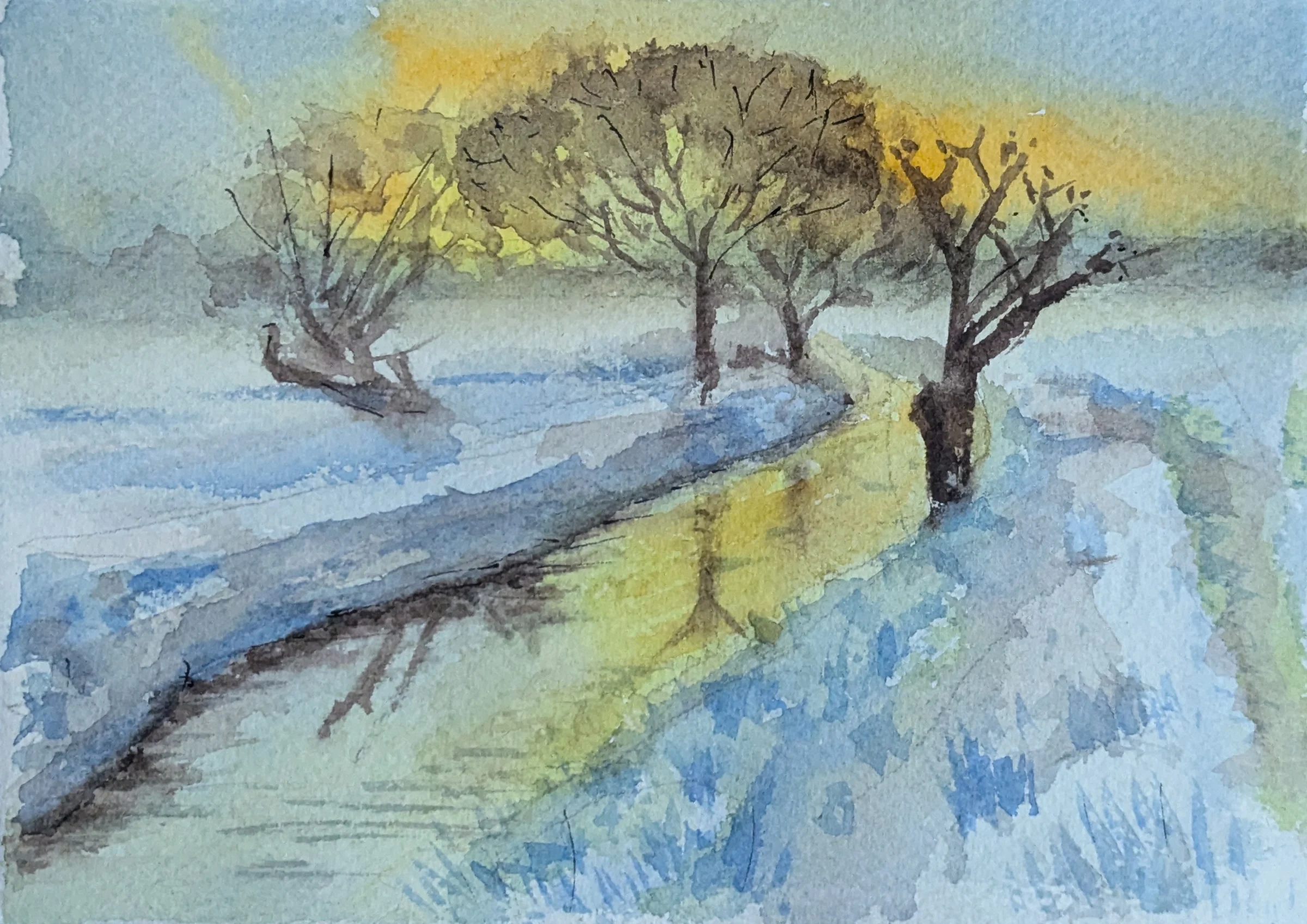
Start with what is actually on the palette
The problem with green is rarely a shortage of tubes. It is the habit of reaching for the same mixture for every tree, hedge and suspicious bit of lawn. For this studio exercise, choose two blues and two yellows you already own. Read their labels and write their names beside your tests. You are investigating these particular paints, not awarding a universal prize to blue plus yellow.
Giovanni Balzarani's demonstration for Daniel Smith compares blue-and-yellow pairings, different proportions and the order of dry glazes. That is a useful reminder that a pair of paints offers more than a single mixture. Our next step is to turn the possibilities into a compact chart you can use while painting.
Four pairs, many decisions
Draw four rows, one for each blue-and-yellow pairing. In each row make a yellow-heavy mixture, a roughly balanced mixture and a blue-heavy mixture. Beside each, pull out a diluted version with clean water. Let everything dry before judging it. A wet puddle on the palette is an entertaining preview, not the finished colour on paper.
Choose one mixture and add a tiny amount of a red or reddish earth from your palette. Test it separately. Does the result suit a duller leaf or a shaded bank? Stop adding before all the candidates become the same brownish compromise. Sometimes that quieter mixture is precisely right; sometimes you have simply lost the colour you needed.
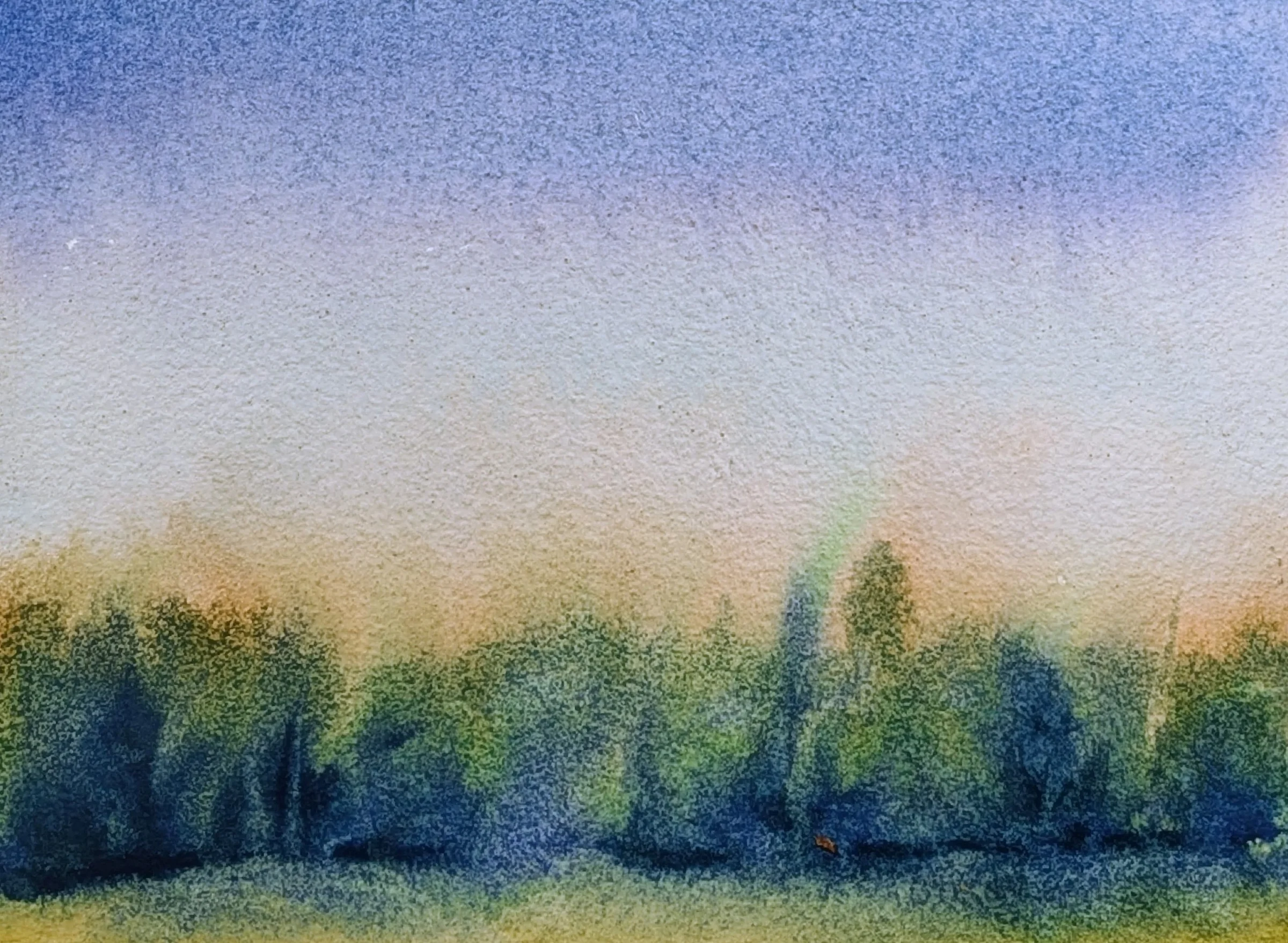
Paint a leaf as light
Place a leaf beside the chart. Look for the lightest area, the main body colour and the darkest fold or overlap. Select mixtures for those jobs rather than trying to find one perfect leaf green. Paint a simple silhouette, keeping a small light where you see it. Let it dry before adding a selective shadow or vein.
Then paint the same leaf with a different pair of paints. Compare which version communicates the light more clearly. The most accurate local colour does not necessarily make the clearest study if every area has the same value. Write one sentence beside each version about the choice that helped.
Keep this chart with the palette. When a landscape turns relentlessly green, use it to choose a specific variation: more yellow, more blue, more diluted, or quieter. Change one thing and assess it. There is no need to convene an emergency committee of twelve new tubes.
One leaf, two palettes
- Chart two blues against two yellows in different proportions.
- Allow the tests to dry and label them.
- Paint one leaf using a chosen pair, then repeat with another pair.
- Compare light, shadow and colour; note one useful difference.
Make this a study of your own subject. These are our practice prompts, not a claim to reproduce an artist’s exact method.
Take a practice sheet →Keep looking
Sources support the factual context; looking notes and exercises are Watercolourist editorial interpretation.
What happened on your paper?
One useful observation beats “lovely work”. Show a study, ask about a decision, or tell us where you disagree.
Join the studio discussion