The edge is the lesson
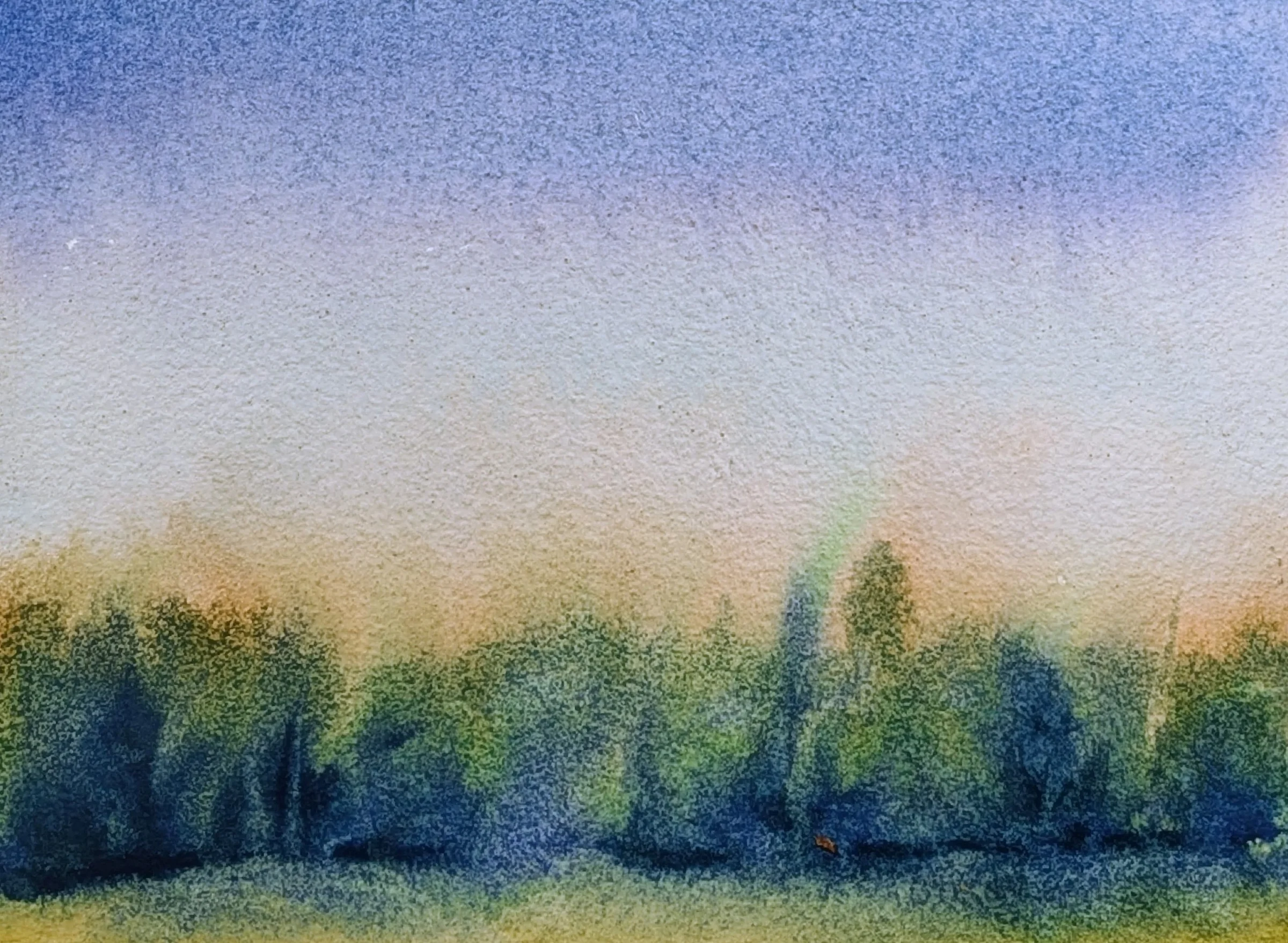
A wash can be beautifully mixed and still land at the wrong moment. Before blaming the brush, look at the surface. Watercolour applied to wet or damp paper can spread into soft transitions; a mark on dry paper generally stays more defined. Winsor & Newton demonstrates the first approach with a mop brush. The useful question for your own painting is: how far do you want this particular mark to travel?
For this studio exercise, forget trees, skies and being impressive. Draw four small rectangles on a scrap of the paper you actually use. Mix one generous puddle of colour. Keep the paint mixture and brush as consistent as possible so the changing paper, rather than six new variables, gets the starring role.
Make a drying map
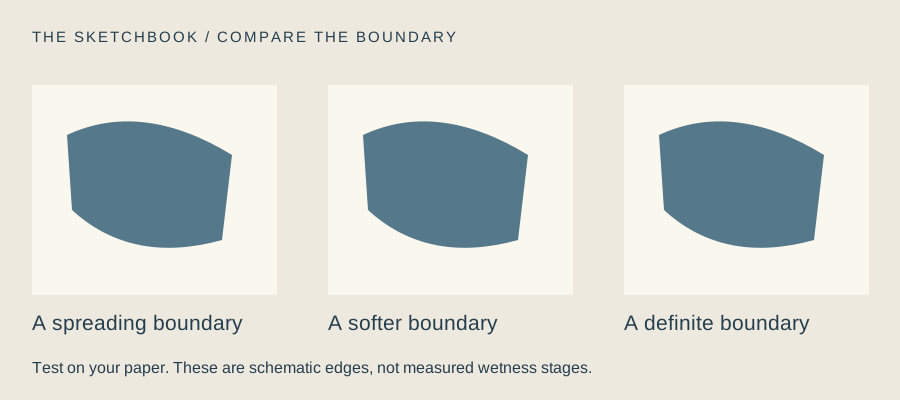
Wet three rectangles evenly with clean water; leave the fourth dry. Put one stroke into the first while the surface visibly shines. Wait until the shine is less pronounced before marking the second. Try the third as the shine disappears, and finally make your comparison on dry paper. Use the side light from a window to inspect the surface without touching the painting area.
Label what happened, rather than what should have happened: wide spread, feathered edge, narrow spread, sharp edge. These are observations, not universal drying stages. Paper, room conditions and the amount of water in the brush can change the result. Repeat the test with a less loaded brush. Notice whether the same apparent surface gives you a different mark.
Give each edge a job
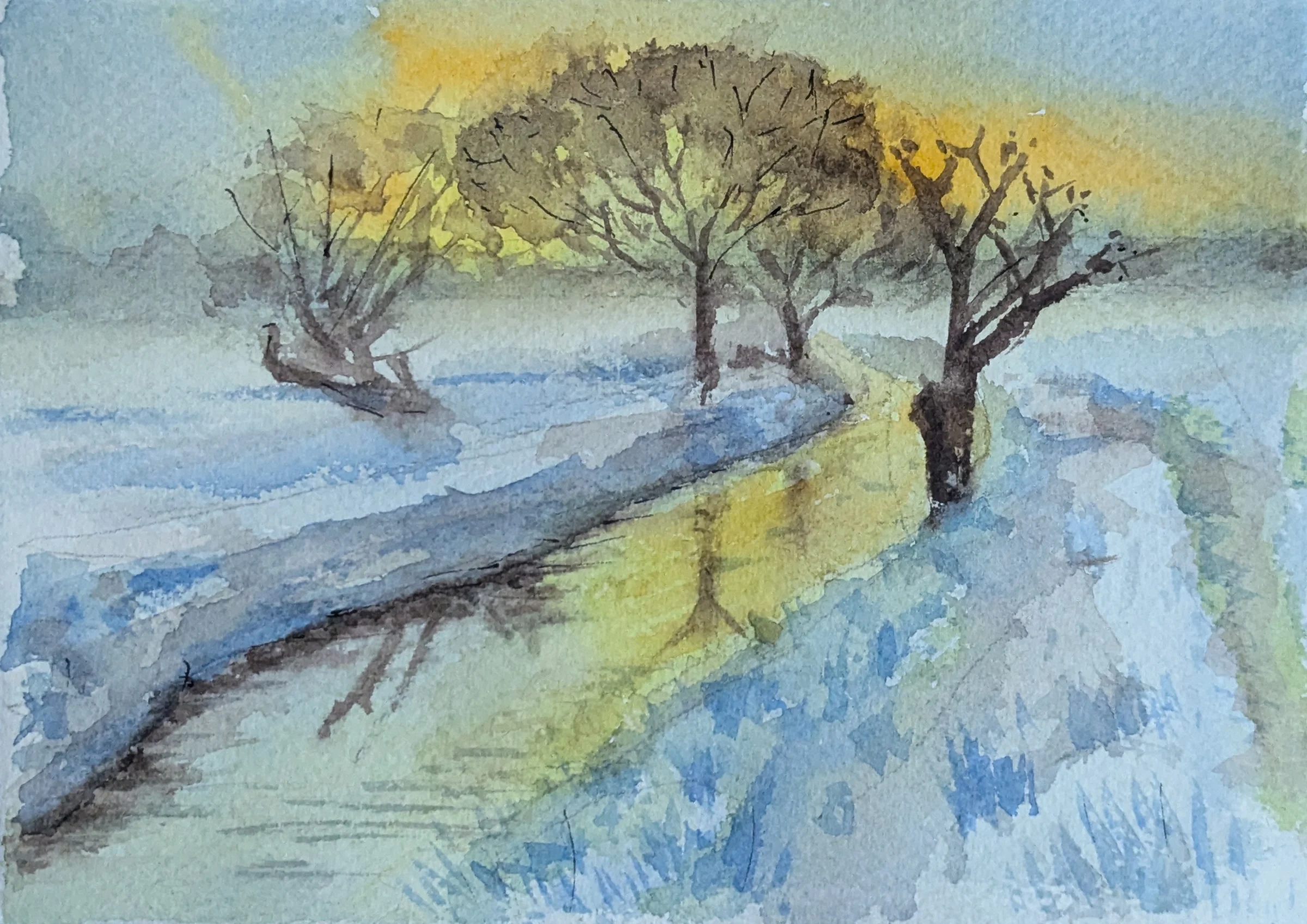
Now paint a very small landscape with one distant tree and one nearby post. Try the tree during the spreading stage you liked; let the sheet dry before adding the post. The point is a deliberate difference between edges. You do not need every distant thing soft or every near thing sharp. Choose the contrast that makes this particular scene read.
If the surface is in an awkward halfway state, waiting is an entirely respectable painting technique. Make the next mixture, look at your reference, or stand back. Resist adding water merely because the brush is bored. Keep your test sheet beside the next painting and use it as a local forecast. It knows more about your paper today than an exact drying time from someone else's studio.
Four edges, one colour
- Draw four rectangles on your usual paper and mix one colour.
- Mark three rectangles at different stages of drying; keep one dry.
- Label the actual edges and repeat with less water in the brush.
- Use your favourite soft edge and hard edge in a tiny landscape.
Make this a study of your own subject. These are our practice prompts, not a claim to reproduce an artist’s exact method.
Take a practice sheet →Keep looking
Sources support the factual context; looking notes and exercises are Watercolourist editorial interpretation.
What happened on your paper?
One useful observation beats “lovely work”. Show a study, ask about a decision, or tell us where you disagree.
Join the studio discussion