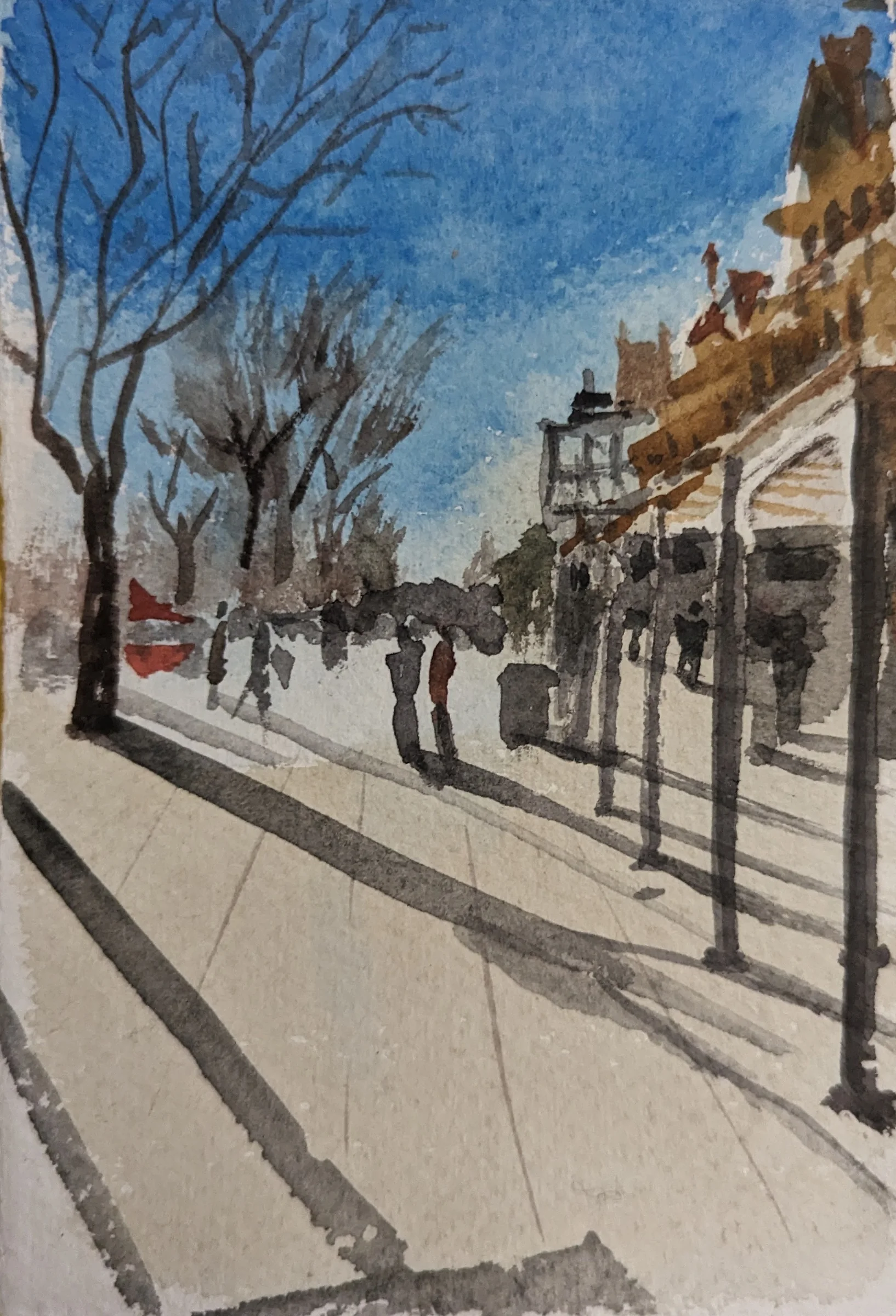
Put the scene on a diet
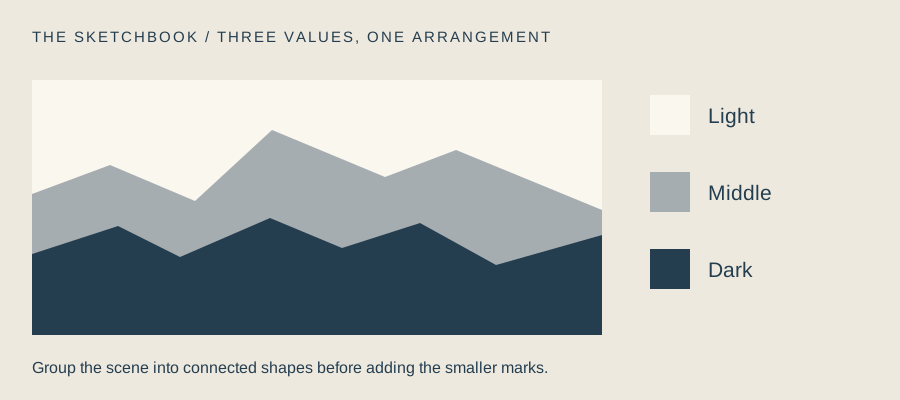
A street offers an unreasonable number of things to paint. There are windows, signs, chimneys and usually a parked car with the charisma of a filing cabinet. Our exercise starts by giving all of them only three possible values: the light of the paper, a middle wash and a dark. This is an editing exercise, not a claim that the world has helpfully organised itself into three tones.
Joseph Zbukvic's official film page introduces Planning Your Painting through subject choice, observation, drawing and composition. Borrow the emphasis on deciding before painting. You do not have to borrow his buildings, palette or handwriting. Use your own view or a photograph you have permission to use.
Find the connected shape
Make three thumbnails about the size of a matchbox. In the first, reserve the sky and a strip of pavement as white. Join the shaded buildings into one middle-value shape wherever the view allows. Add the strongest dark beneath an awning or at the entrance to the street. Keep checking whether the three groups are distinguishable at arm's length.
For the second thumbnail, crop closer. For the third, move the skyline higher or lower. Compare where your eye enters and where it comes to rest. Choose the version with the clearest relationship between light and shadow. A famous building does not automatically make the best painting; sometimes its service entrance has done all the compositional work.
Paint the plan, not the inventory
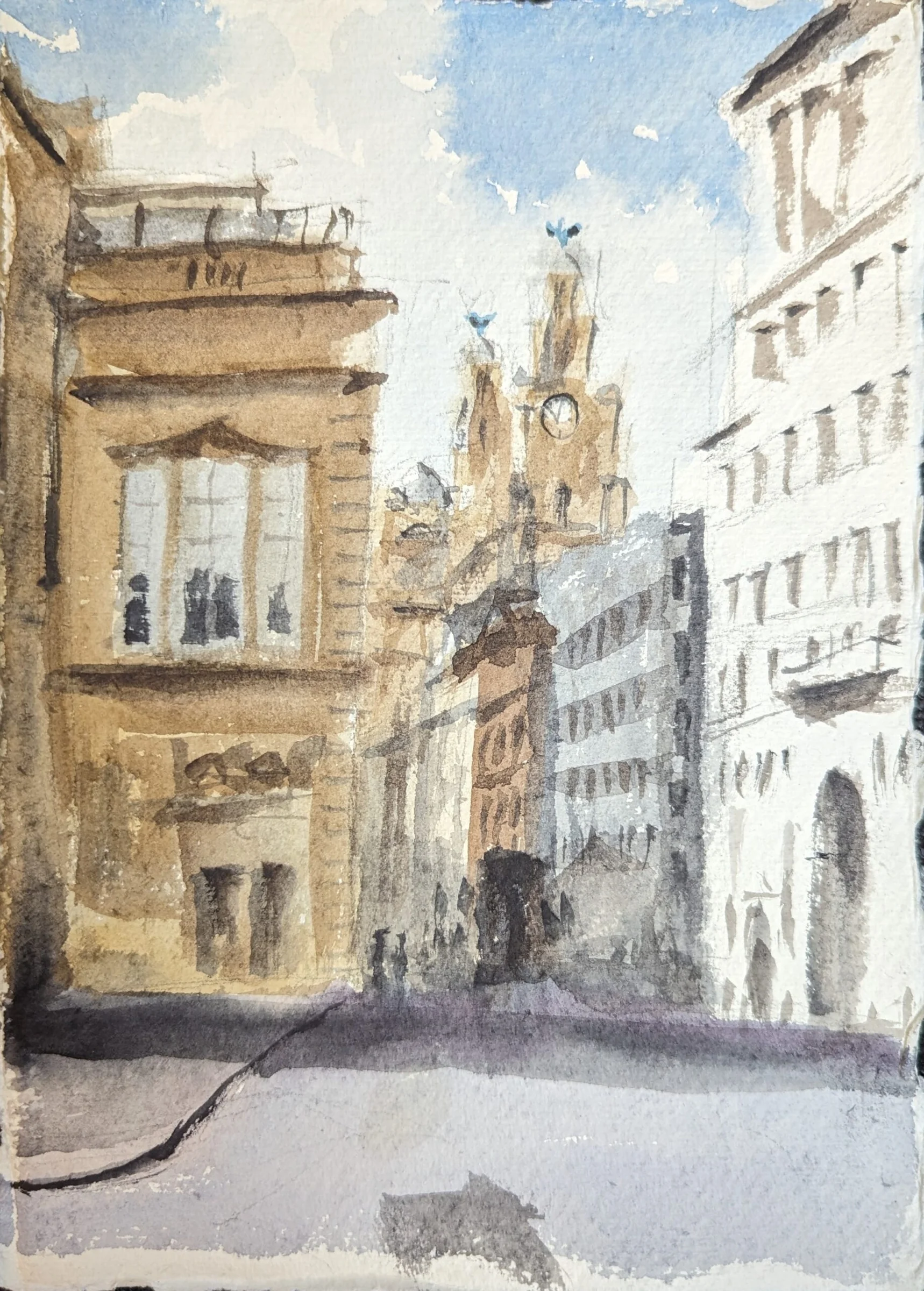
On a small sheet, lightly place only the main angles and boundaries of the reserved light. Mix enough middle-value wash before you start. Paint the connected shadow shapes with the largest brush you can comfortably control at this scale. Let the wash dry, then check its value before deciding how dark the final accents need to be.
Add a few accents to support the chosen focus. A door, two figures or the underside of a roof may be enough. Pause before each extra window: does it help the light, scale or direction? If it simply proves that you saw a window, the painting can probably survive without the testimony.
Finish by comparing the painting with the thumbnail, not by counting missing objects in the photograph. If the big light shape has vanished, note where it was lost. Repeat the study with that one change. The useful result is a more reliable decision, even if the street remains rather suspiciously free of drainpipes.
The matchbox street
- Choose your own street reference and make three small thumbnails.
- Use paper white, a middle value and a dark in each.
- Paint the clearest arrangement on a small sheet.
- Add only details that support light, scale or the focal area.
Make this a study of your own subject. These are our practice prompts, not a claim to reproduce an artist’s exact method.
Take a practice sheet →Keep looking
Sources support the factual context; looking notes and exercises are Watercolourist editorial interpretation.
What happened on your paper?
One useful observation beats “lovely work”. Show a study, ask about a decision, or tell us where you disagree.
Join the studio discussion