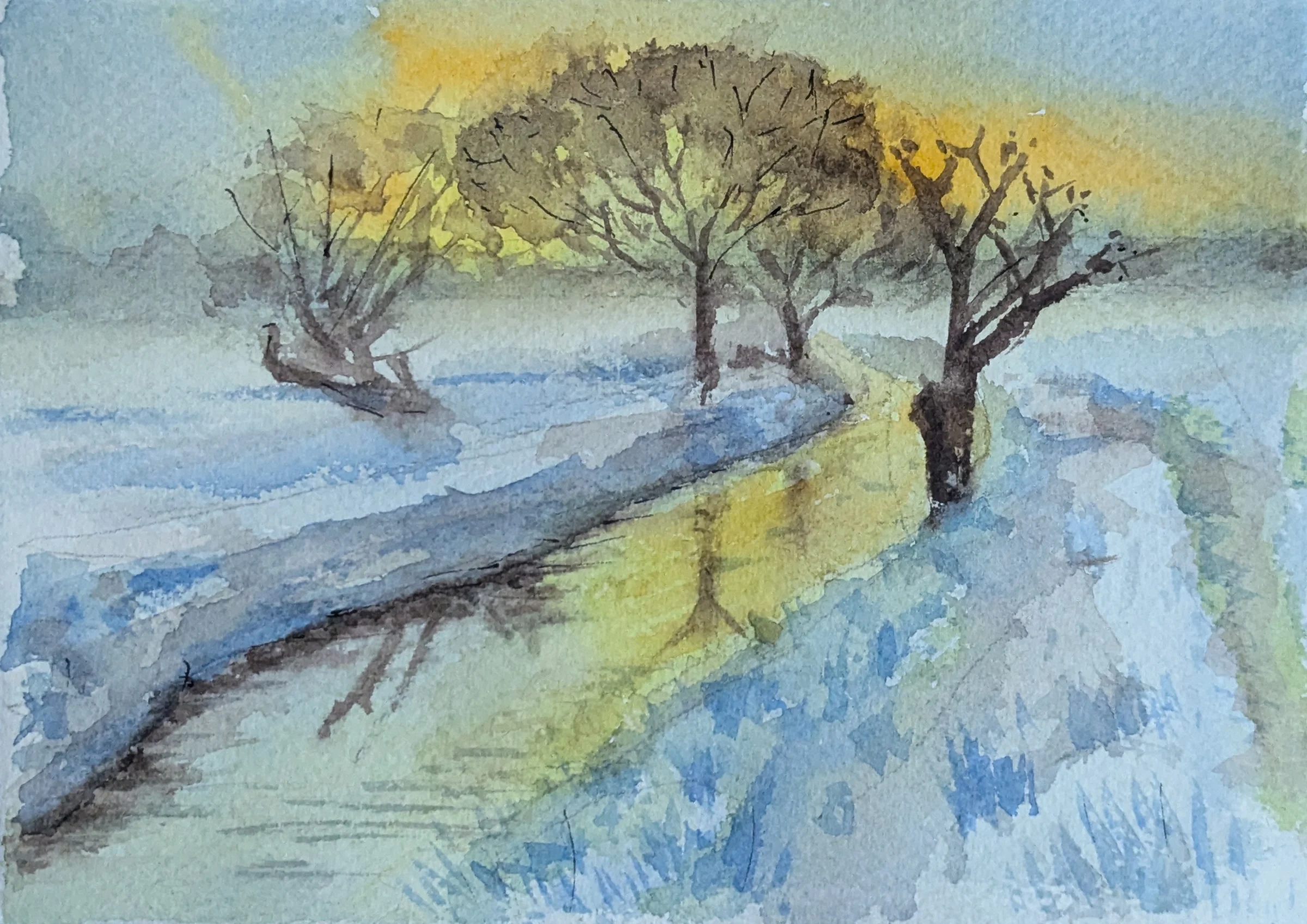
The sheet is doing some of the painting
Paint does not meet an empty stage. It meets a surface that takes up water, holds a wash, interrupts a dry stroke and decides how much disturbance it will tolerate. If your favourite colour behaves strangely on a new pad, the pigment may be innocent. The paper has joined the conversation and, on this occasion, is speaking quite loudly.
Mark uses Baohong rough 300 gsm paper. Rough describes the surface; 300 gsm describes its mass per square metre. Neither word on its own tells you everything about the fibre, sizing or handling. When comparing a different Baohong range or another maker, read the complete label and keep a labelled offcut. A familiar brand name can cover several different papers.
Fibre and sizing do different jobs
Cotton and wood-cellulose papers can both support worthwhile work. Cotton papers are often chosen for wet working and repeated passages; an economical cellulose sheet can be entirely useful for a quick drawing with a few washes. That does not make them interchangeable. The surface preparation, manufacturing and particular way you paint all affect the result.
Sizing regulates how readily water and colour enter the sheet. It helps distinguish a painting surface from a highly absorbent blotter. Manufacturers use different systems: ARCHES describes gelatin sizing through its Aquarelle paper, for example. That is a fact about that paper, not a recipe to assume for every brand. Your practical questions are whether a wash moves as expected, whether the dry surface stays sound, and how a second layer sits over the first.

Rough paper gives the brush something to catch
A rough surface has visible peaks and hollows. With a relatively dry brush held lightly across it, marks can break and leave little reserves of light. Press harder or add more liquid and the result changes. Texture is a possibility to work with, not a machine that prints convincing stone whenever you wave brown paint at it.
Hot-pressed paper is generally smoother; cold-pressed sits between smooth and rough in a maker’s range. The labels do not guarantee identical textures across manufacturers. A smoother surface may suit a precise drawn edge, while a rougher one may make broken marks easier to invite. Compare the same stroke on samples before declaring a surface either professional or impossible.
Weight is useful; it is not a promise of flatness
A 300 gsm sheet is a common working choice, but it can still buckle when wet. Sheet size, how much water you apply, and how it is supported matter. A block holds its edges while you work; a loose sheet can be supported or stretched using a method suitable for that paper. Allow a block painting to dry before removing it.
For small studies, cut a good sheet into manageable pieces and reserve offcuts for tests. Keep the surface free of greasy fingerprints and avoid testing a new tape on a finished painting. If the paper is so precious that every mark feels like a financial decision, reduce the size of the study. An A6 experiment is still capable of telling the truth.
Compare actions, not just a pretty swatch
A single wash will not tell you how a paper copes with glazing or correction. Test a flat wash, an edge added at a chosen dampness, a second layer over fully dry paint, and a gentle lift. Use the same pigment because staining behaviour also affects lifting. Stop if the surface starts to abrade; scrubbing harder is not a neutral scientific method.
Keep the labels and write down what felt easier or harder. You may discover that one sheet is ideal for rapid sketching and another gives you the working interval you need for a larger wash. That is useful information. Once you have learned the timing of a particular paper, familiarity itself becomes part of the kit.
Four tests for a new sheet
- Cut equal samples of two papers and label brand, range, surface and weight. Keep the same brush and paint.
- Make a wash and a broken dry stroke on each; observe the wet sheen and the dry result.
- When fully dry, glaze one half and gently try lifting a small area on the other. Allow extra drying time as needed.
- Write one sentence about the job each paper suits. Repeat a small passage from your next painting on both.
Make this a study of your own subject. These are our practice prompts, not a claim to reproduce an artist’s exact method.
Take a practice sheet →Keep looking
- ARCHES: Aquarelle fibre, surfaces and sizing
- Baohong: Classic paper specification and surface options
- Hahnemühle: Watercolour Paper Guide: Which Paper is Right for You?
- Hahnemühle: Frequently asked questions
Sources support the factual context; looking notes and exercises are Watercolourist editorial interpretation.
What happened on your paper?
One useful observation beats “lovely work”. Show a study, ask about a decision, or tell us where you disagree.
Join the studio discussion