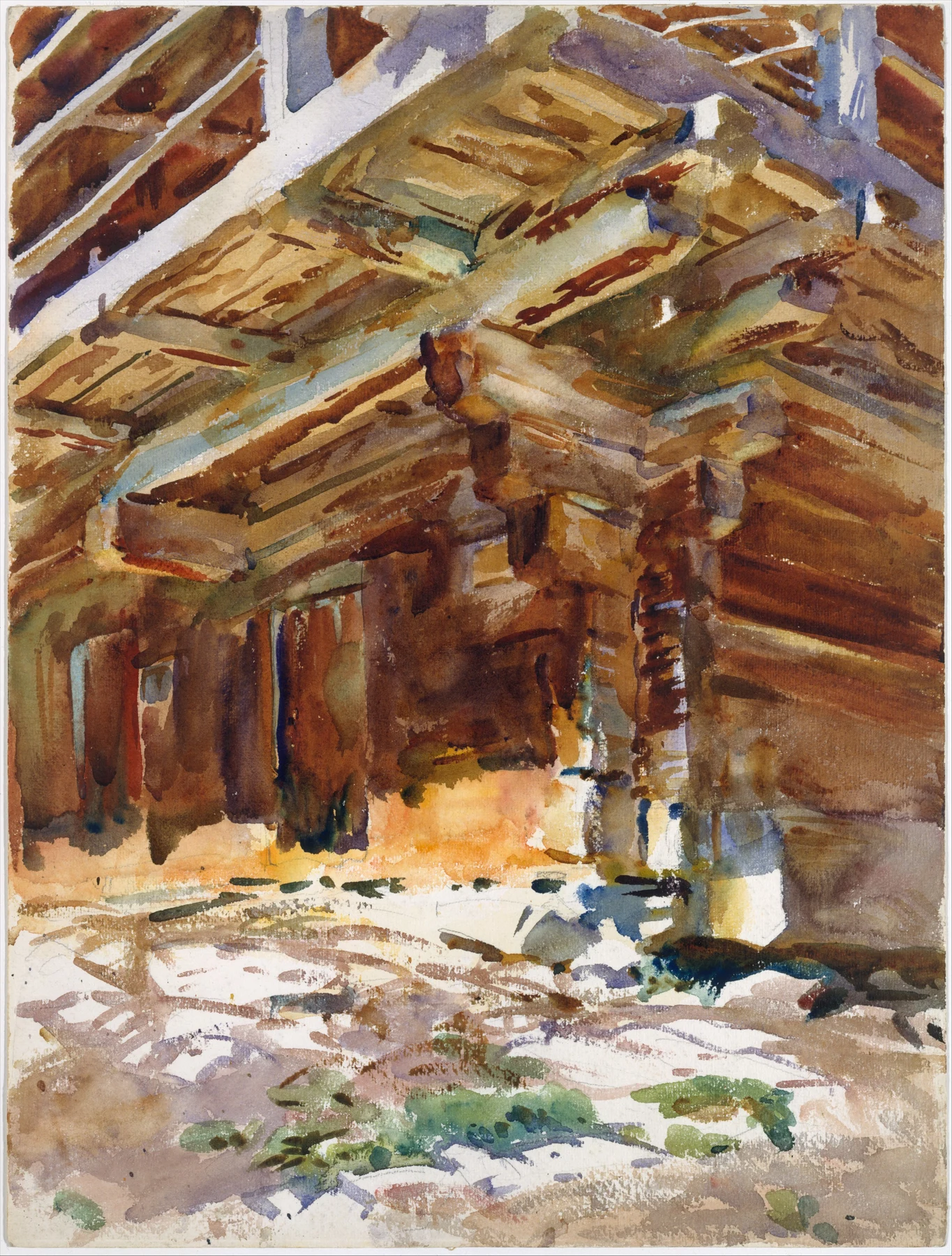
- The timber structure runs beyond the top and side edges.
- Warm browns dominate the beams, interrupted by cool blue and violet passages.
- The lighter, broken foreground opens below the dense upper structure.
These observations describe what is visible, not how the artist made the painting.
What is this painting?
Made around 1912 in Abriès, near the French–Italian border, this sheet turns Alpine architecture into a dense arrangement of beams and shadow. Sargent was an American artist born in Florence, with a working life that crossed national borders. The Met situates the painting among the travel watercolours that became increasingly important as his attention shifted from commissioned portraiture after 1900.
Why it matters
There is no obliging strip of sky to tell us where the building ends. The museum describes a composition approaching abstraction through its intersecting timberwork. It also notes that Sargent did not exhibit the sheet during his life and probably regarded it as unfinished. That uncertainty is worth retaining. A compelling image need not have reached the maker’s intended destination, and a museum object need not be polished into a false story of inevitable success.
An architecture of marks
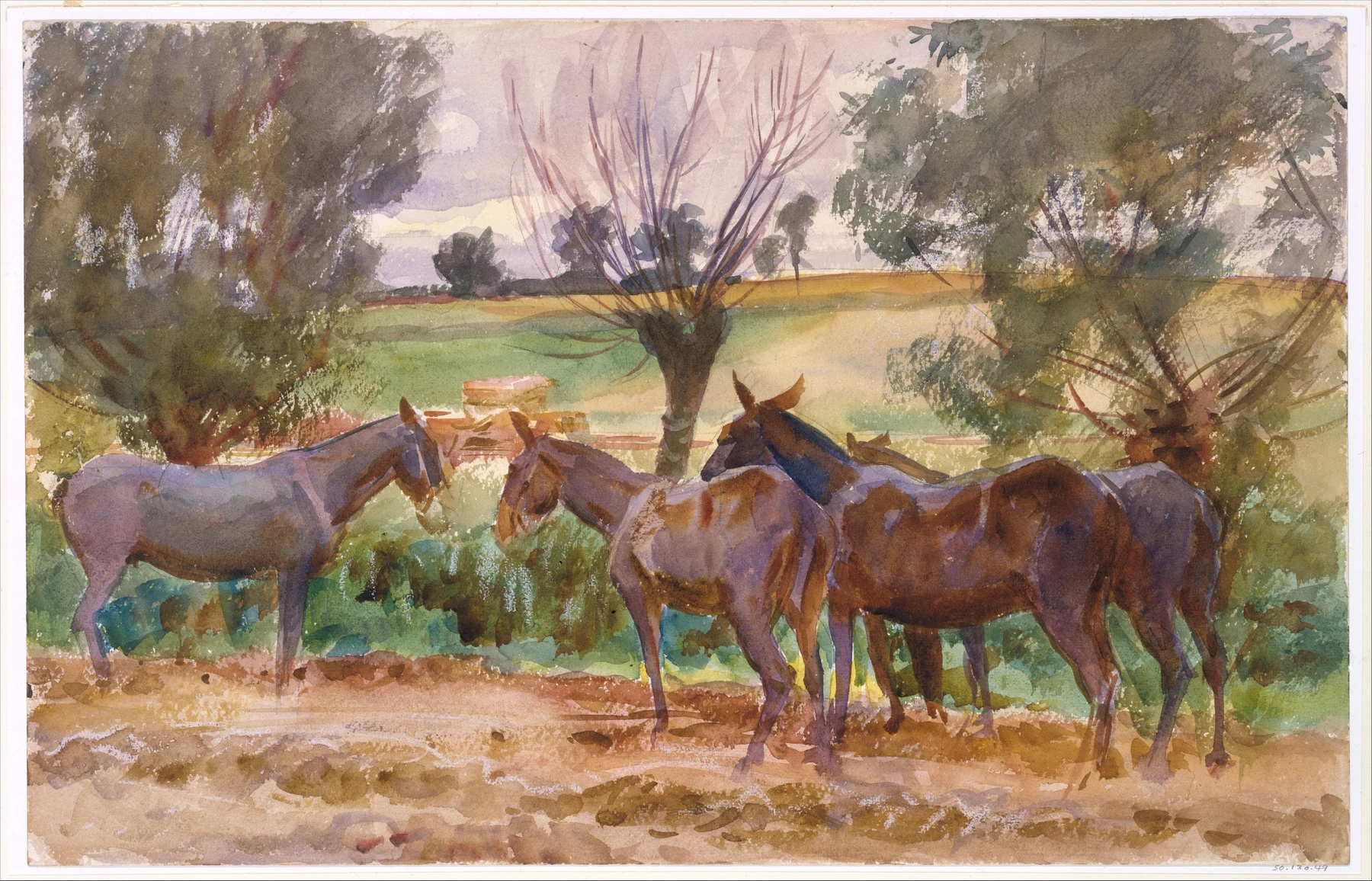
The upper half is a traffic jam of warm diagonals. Lower down, the pale ground releases some of that pressure, while small cool touches interrupt the brown structure. Ask where you first find a foothold, then trace your route through the picture. The 1918 companion sheet Mules belongs to a very different setting, the Western Front; it is included to compare shapes and intervals, not to collapse wartime work into holiday sketching.
What would happen if you stepped backwards and included the skyline? You might gain information and lose the painting. Cropping is an argument about attention, not merely the last thing you do to a photograph.
Leave the skyline outside
- Choose a staircase, shed or doorway and draw three close crops.
- Choose the crop with the strongest connected dark, even if the object is less immediately recognisable.
- Make a small two-colour study. Compare how the empty intervals organise the structure.
Make this a study of your own subject. These are our practice prompts, not a claim to reproduce an artist’s exact method.
Take a practice sheet →Keep looking
Sources support the factual context; looking notes and exercises are Watercolourist editorial interpretation.
What happened on your paper?
One useful observation beats “lovely work”. Show a study, ask about a decision, or tell us where you disagree.
Join the studio discussion