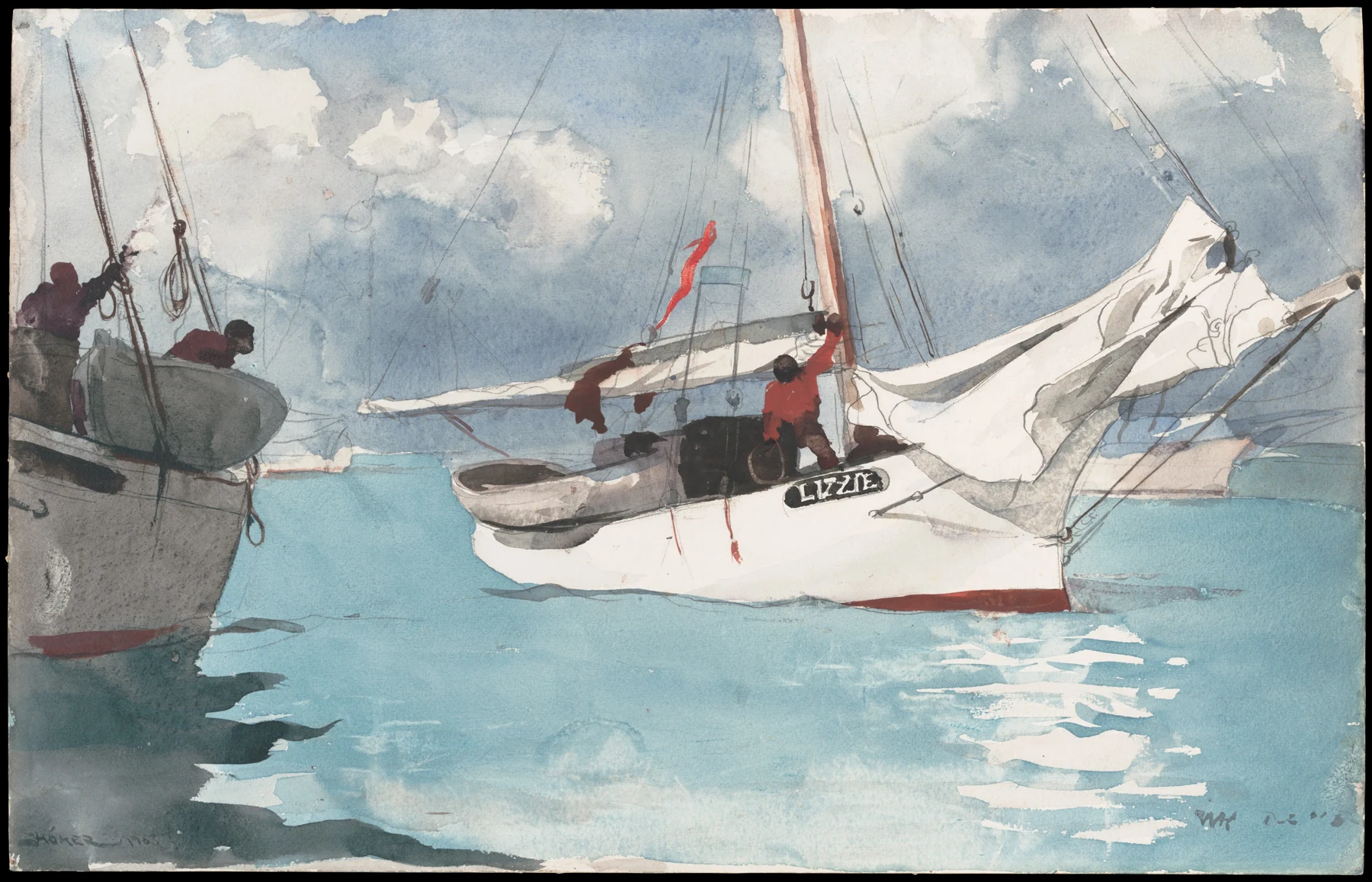
- One boat is cropped by the left edge; another sits against a wider stretch of water.
- Broad white hull and sail shapes contrast with slender rigging lines.
- Broken pale marks interrupt the blue-green water beneath the right-hand boat.
These observations describe what is visible, not how the artist made the painting.
What is this painting?
Homer’s title places this 1903 watercolour in Key West, Florida. The Met adds an important complication: the craft appear to be typical Bahamian fishing boats. Its account connects the scene to long-standing travel between the Bahamas and Florida, including Black Bahamian migration after the American Civil War. The water is beautiful; it is also a route between communities and a place of work.
Why it matters
The sheet brings virtuoso handling into contact with an ordinary maritime subject. The museum identifies reserved paper in the boat, sail and reflected light, and fluid washes around it. White is not the absence of a decision: it holds the composition together. Reading the museum’s historical context also changes the encounter. Instead of treating the boats as decorative holiday scenery, we can ask who travelled in them and what kinds of livelihood they sustained.
Look between the boats
The large boat enters from the left edge, partly cut off. The right-hand vessel has more breathing room and a broad white side. Across the blue-green foreground, broken white reflections make the sea feel active without describing every wave. The fine rigging introduces another pace of mark beside the broad hulls. Our visual comparison is between these rhythms, not a claim that we know the order of every brushstroke.
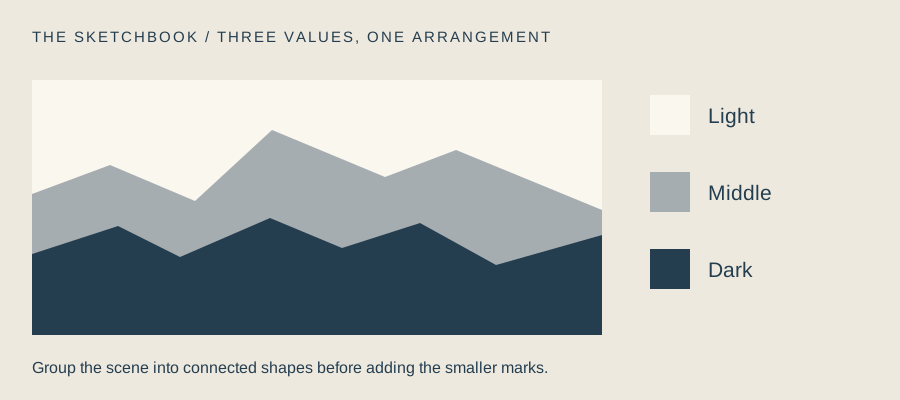
Would the picture become weaker if the left boat were shown whole? It is a useful question for painters who feel obliged to include the entire harbour, the car park and possibly the receipt for lunch. The schematic below helps separate the arrangement of values from the appealing subject.
A white shape that earns its place
- Choose a mug, folded cloth or boat reference and mark one connected light shape.
- Make a three-value thumbnail, using untouched paper for that light.
- Paint the surrounding middle and dark shapes. Stop before filling every gap; compare the reserved shape with your plan.
Make this a study of your own subject. These are our practice prompts, not a claim to reproduce an artist’s exact method.
Take a practice sheet →Keep looking
Sources support the factual context; looking notes and exercises are Watercolourist editorial interpretation.
What happened on your paper?
One useful observation beats “lovely work”. Show a study, ask about a decision, or tell us where you disagree.
Join the studio discussion