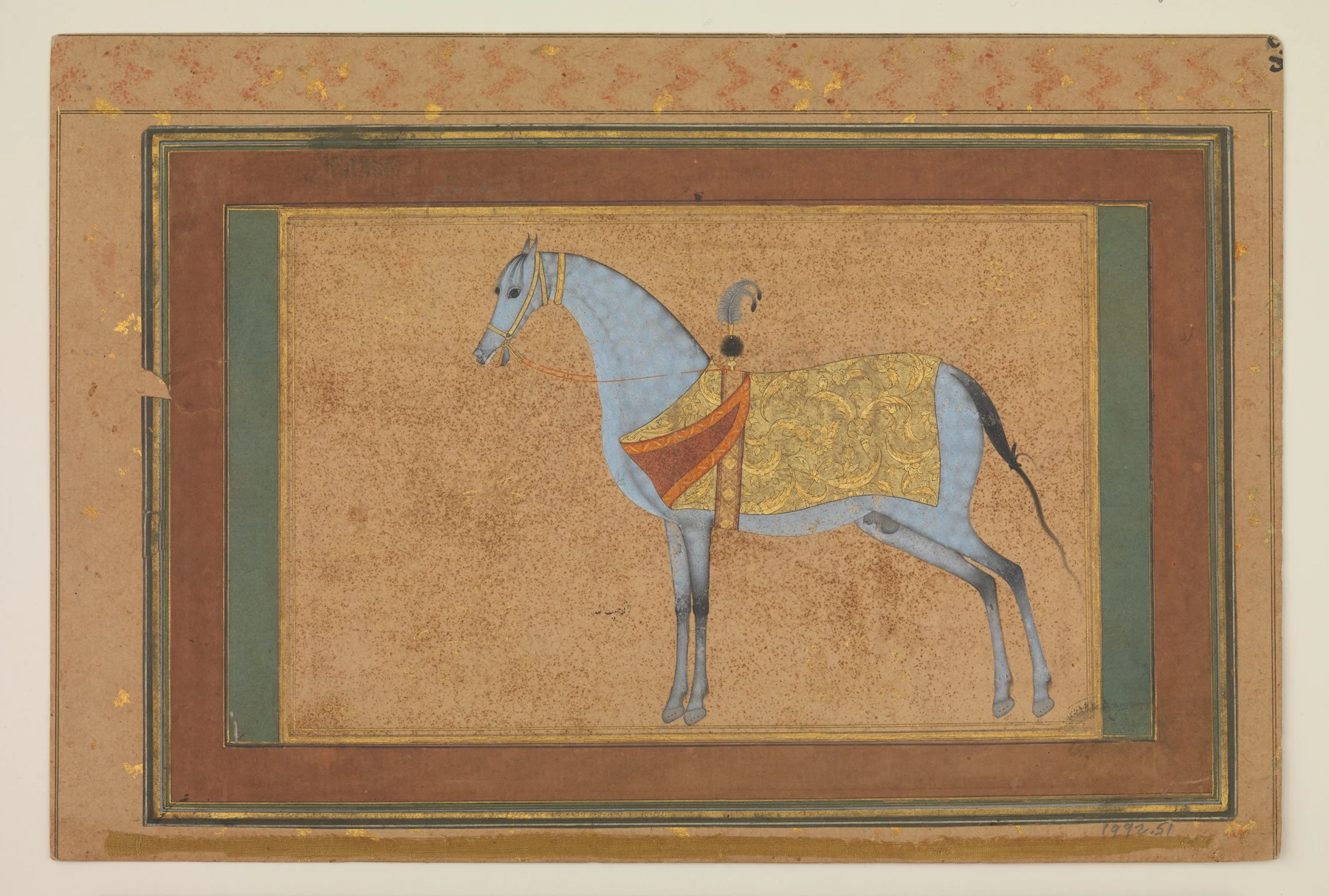
- Follow the horse’s whole outline without looking at the saddlecloth.
- Compare the quiet neck with the dense leaf ornament over the body.
- Notice how warm background and cool animal separate without a painted landscape.
These observations describe what is visible, not how the artist made the painting.
A courtly animal portrait — why it matters
Habiballah of Sava was an Iranian painter active around 1590–1610. The Met attributes this work’s production to Herat, in present-day Afghanistan. That combination reminds us that artistic traditions and modern national borders do not line up neatly. The museum places the horse within a wider culture of royal animal imagery and identifies the saddlecloth’s elaborate serrated leaves as saz ornament. Ink, opaque watercolour and gold contribute different kinds of surface interest. Its splendour is part of the subject.
Read the outline before the pattern
The pale blue-grey horse stands against a warm field. Follow the small head, arched neck, long legs and narrow tail without entering the saddlecloth. The outer contour is remarkably easy to read. Now look inside: gold ornament and red accents create a second, busier rhythm across the body. Our reading is that these two levels support each other. The plain neck gives the eye somewhere to rest before the decorated cloth. The surrounding borders add another deliberate interval between animal and page edge.
Let one area do the showing off
For an original study, draw a familiar object with a strong profile: a jug, shoe or watering can works nicely. Keep most of it quiet and decorate just one panel. Compare the result with an evenly patterned version. This exercise explores the visible balance of contour and ornament; it does not reconstruct Habiballah’s materials or technique. If using transparent watercolour, leave the palest shape as paper; if using gouache, try a pale body colour. Both can answer the design question. Neither needs actual gold to feel considered.
One quiet shape, one ornate panel
- Draw the same jug or shoe twice with a clear, unbroken profile.
- Paint a simple body colour and add a patterned panel to only one small area of the first.
- Pattern the second all over. Compare which better preserves the object’s overall character.
Make this a study of your own subject. These are our practice prompts, not a claim to reproduce an artist’s exact method.
Take a practice sheet →Keep looking
Sources support the factual context; looking notes and exercises are Watercolourist editorial interpretation.
What happened on your paper?
One useful observation beats “lovely work”. Show a study, ask about a decision, or tell us where you disagree.
Join the studio discussion