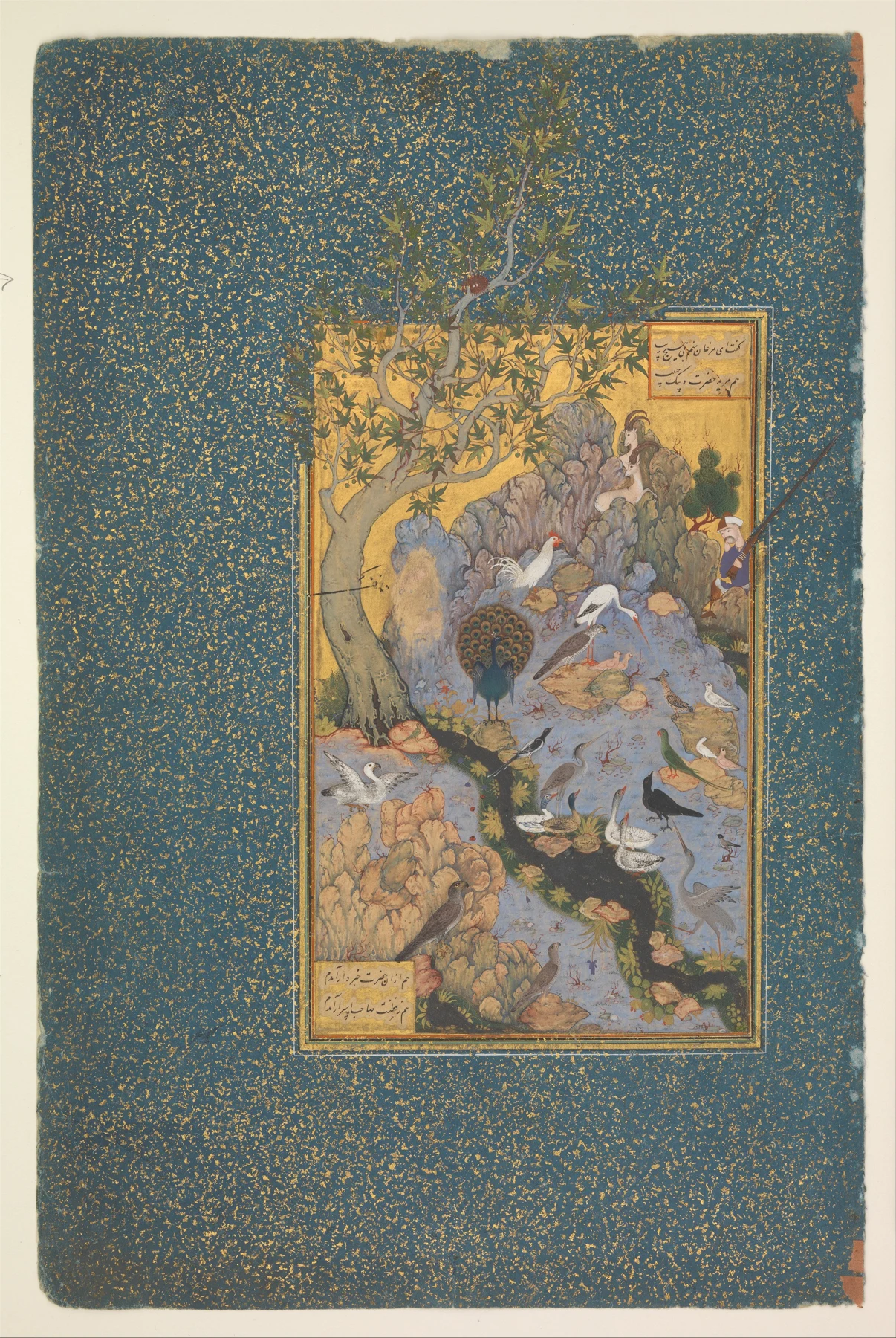
- Trace the dark stream and see how it connects separate groups of birds.
- Find where the tree crosses the inner frame into the outer margin.
- Compare pale birds against cool ground with darker birds against warm rocks.
These observations describe what is visible, not how the artist made the painting.
A gathering with a spiritual purpose — why it matters
This illustration accompanies Farid al-Din ‘Attar’s mystical poem Mantiq al-Tayr. The birds represent souls embarking on a search for spiritual unity, led by a hoopoe. The Met dates Habiballah’s painting to about 1600 and attributes its place of production to Isfahan. Its materials include opaque watercolour and precious metals: this is a manuscript painting with a rich surface, not an exercise in leaving white paper visible. The story gives the gathering a purpose beyond an inventory of attractive birds.
Find a route through the crowd
The dark winding stream offers a clear route through the lower picture. Around it, birds of different sizes perch on rocks, stand by water and turn in different directions. My visual reading is that the landscape gives each creature a small stage while still joining them into a group. Warm rocks interrupt the cool ground; pale birds show crisply against darker areas. Above, a tree reaches beyond the inner rectangular frame into the blue-and-gold margin. That crossing makes the picture feel less contained than its careful borders first suggest.
Plan the gathering before the feathers
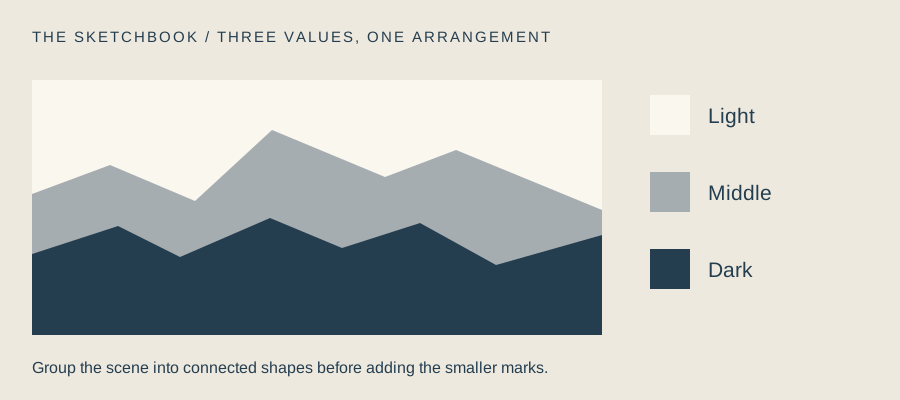
A modern sketchbook study can borrow that organisational question: how do you hold a dozen small things together? Arrange shells, cups or leaves along a winding path. Give the biggest shapes different positions and leave gaps that the eye can travel through. This is our composition exercise, not a substitute for understanding the poem or a claim to reproduce Persian manuscript practice. Work out the big light and dark pattern before decorating. A beautifully painted feather cannot rescue a crowd with nowhere to stand.
Arrange a gathering
- Make a thumbnail with a winding dark path and three large surrounding shapes.
- Place nine simple leaf or bird silhouettes along it, varying size and spacing.
- Add colour only after the arrangement reads at arm’s length; reserve detail for two subjects.
Make this a study of your own subject. These are our practice prompts, not a claim to reproduce an artist’s exact method.
Take a practice sheet →Keep looking
Sources support the factual context; looking notes and exercises are Watercolourist editorial interpretation.
What happened on your paper?
A study, a discovery, or a wash with a mind of its own. Share your painting, ask a question or show what happened when you tried an exercise. Tell us if you would like critique.
Sign in or join to post under your username. Your contribution appears in the studio discussion with a link back here. See what other painters are discussing →