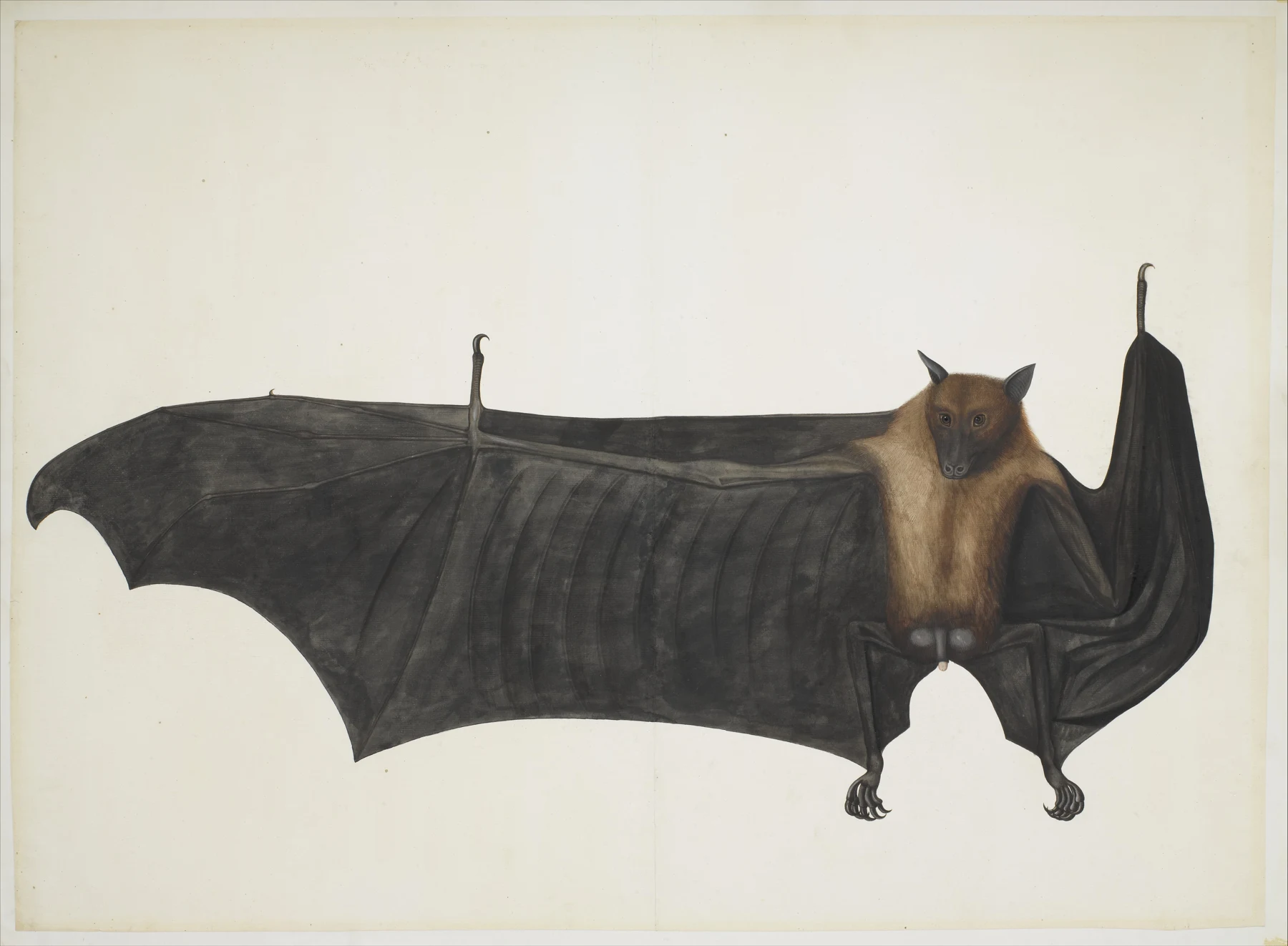
- Compare the long horizontal spread of one wing with the upright folded shape of the other.
- Look for differences within the dark membrane before studying the fur.
- Notice how the small warm face becomes a focal point inside a much larger dark shape.
These observations describe what is visible, not how the artist made the painting.
Observation within a colonial setting — why it matters
The Met attributes this painting to Bhawani Das or a follower, rather than claiming a secure signature. It was made in Calcutta around 1777–82. The museum connects it to the natural-history pictures commissioned from the Mughal-trained Bhawani Das by Elijah and Mary Impey. That context matters: these images brought Indian painters’ skills into the collecting projects of British patrons in colonial Bengal. The medium is pencil, ink and opaque watercolour. Careful observation and opaque colour belong comfortably in the wider story of painting with water.
One wing changes the whole page
The extended left wing spreads almost horizontally across the sheet; the other folds upward beside the body. This imbalance makes the animal much more arresting than a symmetrical emblem. At a distance, the wings read as a single dark mass. Closer inspection reveals lighter structural lines and subtle changes within the membrane, while the tawny fur supplies a different texture. Our reading is that the large untouched-looking surrounding field gives these close observations room to register. The tiny face holds its own against that enormous span.
Make the dark area interesting
Try the exercise below with a dark leaf or an open umbrella from your own reference. Begin with the overall shape and then ask where its darkest and lightest parts actually sit. Do not assume that a black object is one flat black mixture. This is an editorial observation study, not a reconstruction of the painter’s procedure. Keep a little room between your deepest dark and the surrounding passages so internal structure remains visible. Detail works best when it explains something, rather than merely proving that you own a small brush.
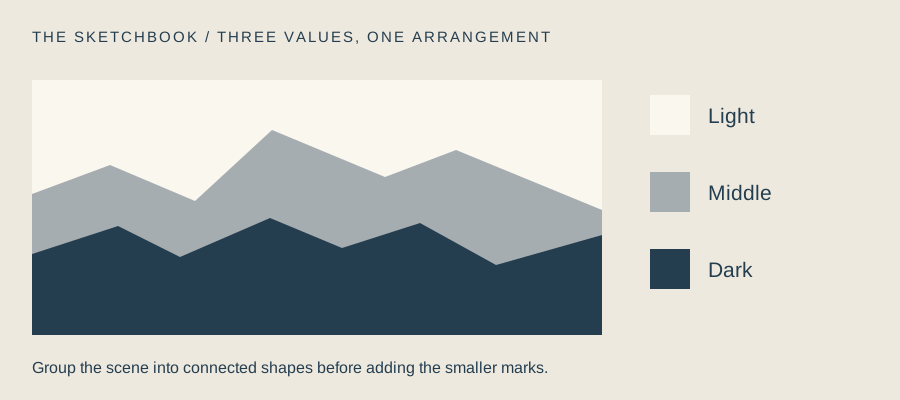
Three values inside a dark shape
- Choose your own photograph of an umbrella or a dark leaf and sketch its silhouette.
- Paint it with three distinct dark values, keeping the deepest mixture for a few structural accents.
- Add texture to one small section only, then check whether the whole form still reads from across the room.
Make this a study of your own subject. These are our practice prompts, not a claim to reproduce an artist’s exact method.
Take a practice sheet →Keep looking
Sources support the factual context; looking notes and exercises are Watercolourist editorial interpretation.
What happened on your paper?
One useful observation beats “lovely work”. Show a study, ask about a decision, or tell us where you disagree.
Join the studio discussion