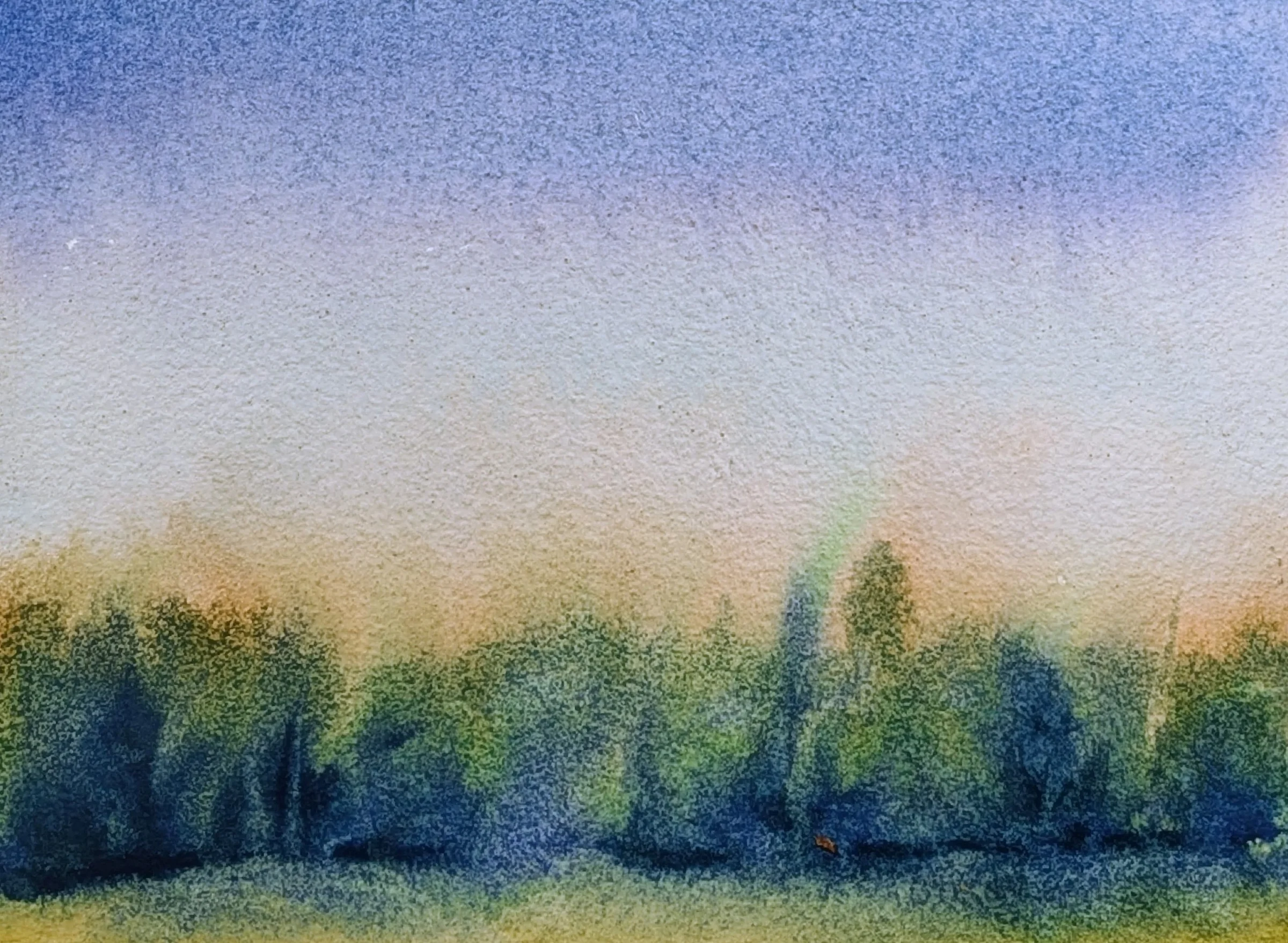
- In Treeline at Dusk, the blue upper sky gives way to a broad pale area and a warmer band above the trees.
- The treeline occupies the lower part of the painting, leaving the changing sky colour as the largest area to look at.
These observations describe what is visible, not how the artist made the painting.
Decide what the sky is doing
Before painting a cloud, describe the weather in one sentence. A pale opening beneath heavy cloud. High wisps over a clear horizon. A blue evening settling into warmer light. This gives the study a purpose beyond filling the top half of a landscape. Clouds are exceptionally poor at holding a pose, so a decision made early is useful.
The Metropolitan Museum describes Constable's sky studies as part of a sustained effort to record changing weather and times of day. Its small watercolour Cloud study is dated 1830–35. The lesson we can reasonably borrow is attentive repetition. A page of observations can be more useful than one ambitious sky that has absorbed the weather from three different afternoons.
Keep a simple weather note
Make two small rectangles and note the time, direction you are looking and whether the cloud is moving quickly. Choose a manageable section of sky. On the first rectangle, draw only the boundary of its largest light shape. On the second, make a colour note. Keep both tied to the same moment rather than chasing every new opening.
Treeline at Dusk suggests a useful alternative to describing individual clouds: watch the broad changes in colour and value across the sky. Its blue upper area, pale middle and warmer low band remain readable without a catalogue of cloud outlines. Try that kind of large-scale observation when the light interests you more than a particular cloud formation.
Use the surface to vary the boundary
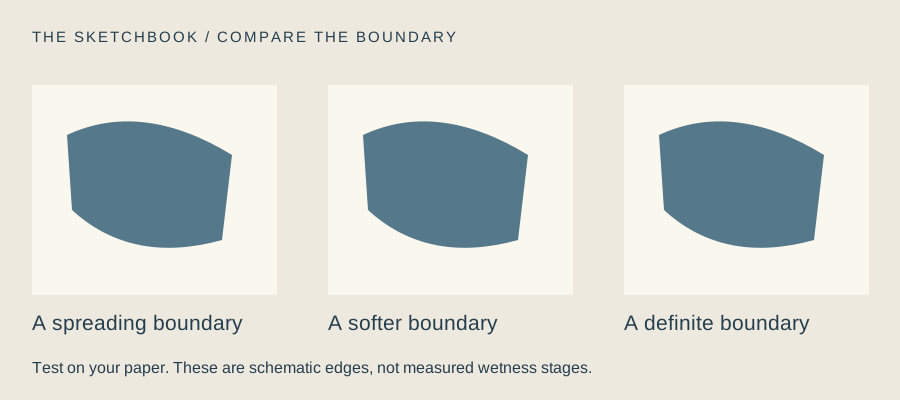
For our painting study, mix your sky colour and a modest cloud-shadow mixture before wetting the sheet. Test the mixtures together. Decide which light shapes will remain untouched. On a lightly dampened test area, try placing colour beside a reserved light and watch how far the edge moves. On dry paper, repeat the mark and compare the boundary.
Use the version that suits your observed sky. Winsor & Newton's wet-on-wet demonstration shows how a wet or damp surface can encourage softer transitions. That does not mean every cloud needs a soft outline. Look for the difference between a definite sunlit edge and a less distinct shadow passage, and let those observations guide the marks.
Let the cloud remain a shape
Place the main sky area, then add only the shadow needed to describe the chosen cloud mass. Keep checking the large light shape instead of elaborating every bump. If the surface has begun to dry unevenly, pause. A slightly unexpected cloud is usually easier to live with than one repeatedly interrogated with a wet brush.
When dry, add a narrow strip of land to one study and leave the other without a horizon. Compare how the same sky behaves in each format. Record whether the sky feels heavy, open or restless and which value relationship caused that impression. Repeat on another day. Your aim is a useful collection of specific skies, not a single formula capable of doing October on command.
One weather event, two studies
- Record the time, viewing direction and one sentence about the weather.
- Make a shape note and a colour note from the same stretch of sky.
- Test one soft boundary and one firmer boundary before painting.
- Keep one study entirely sky; add a narrow land strip to the other and compare.
Make this a study of your own subject. These are our practice prompts, not a claim to reproduce an artist’s exact method.
Take a practice sheet →Keep looking
- The Metropolitan Museum of Art: Constable, Cloud study, 1830–35
- Winsor & Newton: wet-on-wet with a mop brush
Sources support the factual context; looking notes and exercises are Watercolourist editorial interpretation.
What happened on your paper?
A study, a discovery, or a wash with a mind of its own. Share your painting, ask a question or show what happened when you tried an exercise. Tell us if you would like critique.
Sign in or join to post under your username. Your contribution appears in the studio discussion with a link back here. See what other painters are discussing →