Give the page one question
A sketchbook can become so precious that opening it feels like applying for planning permission. Lower the stakes. Choose a small subject within reach: a cup, a shoe, a leaf, the corner of a room. Choose one question too. Where is the darkest shape? Can three marks suggest that handle? What happens if the shadow is warmer? The page is here to investigate, not audition.
Practice sheets have respectable company. The Royal Collection records a watercolour practice sheet made by Queen Victoria around 1846–50 during her period of lessons with artists. You need neither a royal collection nor an elaborate excursion to make a study worthwhile. This twenty-minute routine is our own suggestion; adjust it to your materials and available time.
Two, three, ten, five
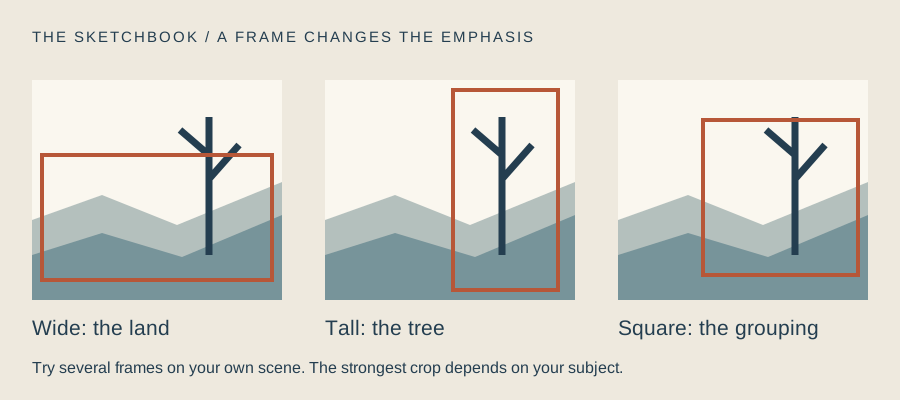
Spend two minutes looking without drawing. Find the outer shape and the strongest light-dark relationship. Spend the next three minutes making two tiny pencil arrangements. Shift the object to one side in one version. Crop it more closely in the other. Pick one, even if neither is glorious.
Use the next ten minutes for a small watercolour study. Keep to two or three colours and one main brush if that helps you start. Preserve an important light, establish a main wash, and add a few darker marks when the surface is ready. The clock limits the session, not the laws of drying. If the paper remains wet, make another test beside it instead of forcing the next layer.
Reserve five minutes for looking and notes. Write the paint names, the paper if known, and one observation you can act on. 'The cast shadow needed to join the cup' is more useful than 'bad painting'. Add one possible change for tomorrow. Then clean the brush and leave the page to dry before closing the book.
Repeat before you upgrade
Return to the same subject for three sessions. Change the viewpoint, the crop or the palette, one at a time. Familiarity frees up attention for the painting problem. A cup can survive three sittings without requesting a modelling fee.
Review the pages together after the third session. Circle the strongest decision on each and choose one to carry into a longer painting. If nothing seems to work, reduce the task again: one shadow, one wash, one edge. The habit becomes useful when you can see what you tried and what happened, not when every page looks ready for a tasteful overhead photograph.
A cup, three appointments
- Look for two minutes; make two small arrangements in three.
- Paint for ten minutes, respecting the paper's drying state.
- Use five minutes to write one observation and one next step.
- Repeat the subject on two more days, changing one decision each time.
Make this a study of your own subject. These are our practice prompts, not a claim to reproduce an artist’s exact method.
Take a practice sheet →Keep looking
Sources support the factual context; looking notes and exercises are Watercolourist editorial interpretation.
What happened on your paper?
One useful observation beats “lovely work”. Show a study, ask about a decision, or tell us where you disagree.
Join the studio discussion