Name the problem first
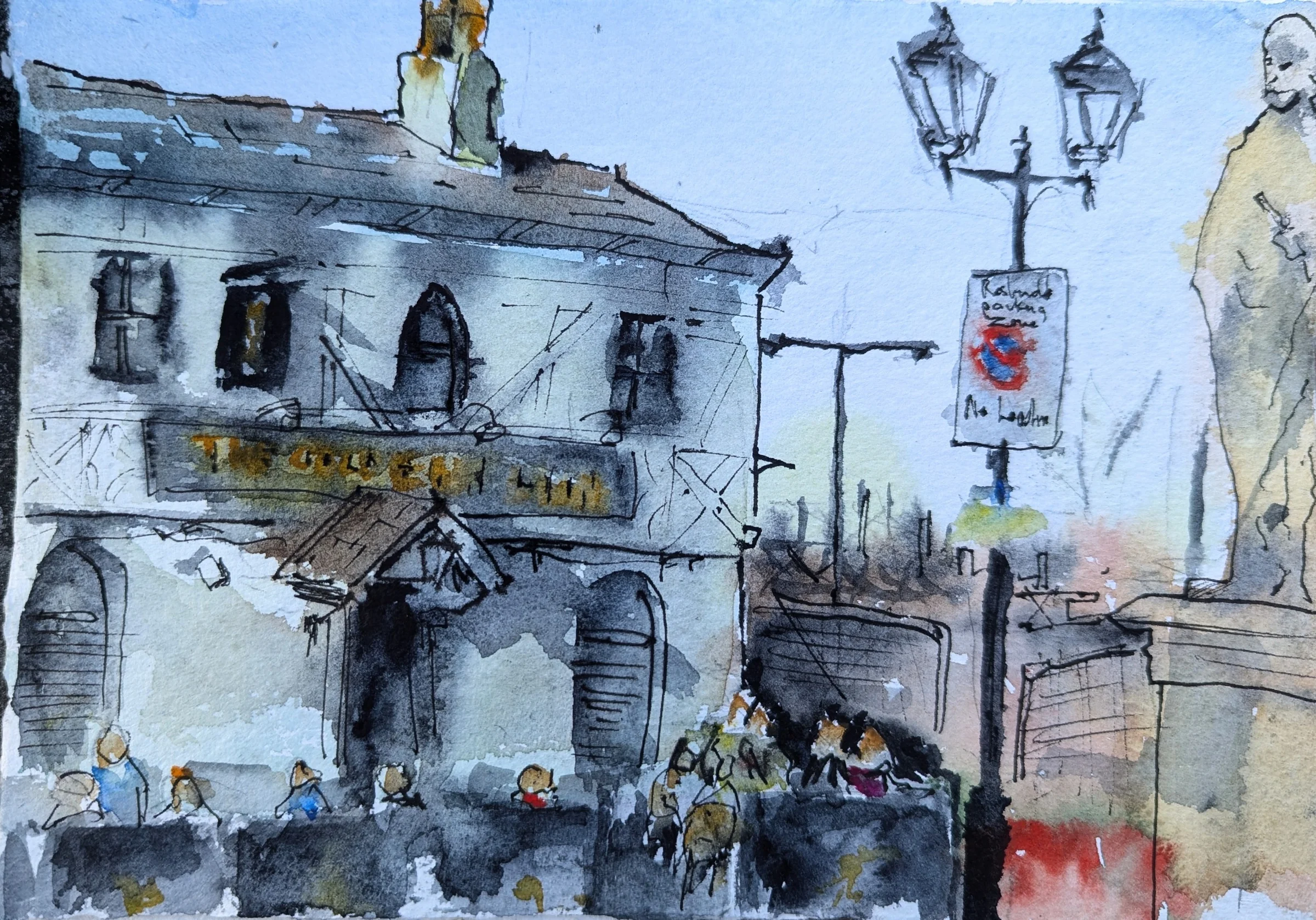
There is a stage when a painting feels unfinished and the brush begins looking for employment. Before giving it a window, a twig or another dark corner, put the sheet upright and step back. Describe the problem in one plain sentence. The light does not read. The foreground is too busy. That edge attracts attention. 'It needs something' is a mood, not a useful diagnosis.
This is our studio triage routine: first look at the whole painting, then the specific area, then the whole painting again. An untidy patch may be doing perfectly good work at viewing distance. A tiny correction that improves the patch can still weaken the larger arrangement.
Check whether the surface can take it
Winsor & Newton's lifting guide identifies paper and colour choice as factors in removing watercolour. Staining colours can resist lifting, and a result on one sheet does not promise the same result on another. Make a test with the actual paint and paper before expecting a dark passage to return to clean white.
For a modest lightening attempt, let the area dry and try a small, soft, damp brush followed by a gentle blot on a test patch first. Avoid repeated scrubbing. If the paper starts to roughen or the passage grows larger without becoming clearer, stop. You do not owe a failed correction another five corrections.
Choose the smallest useful intervention
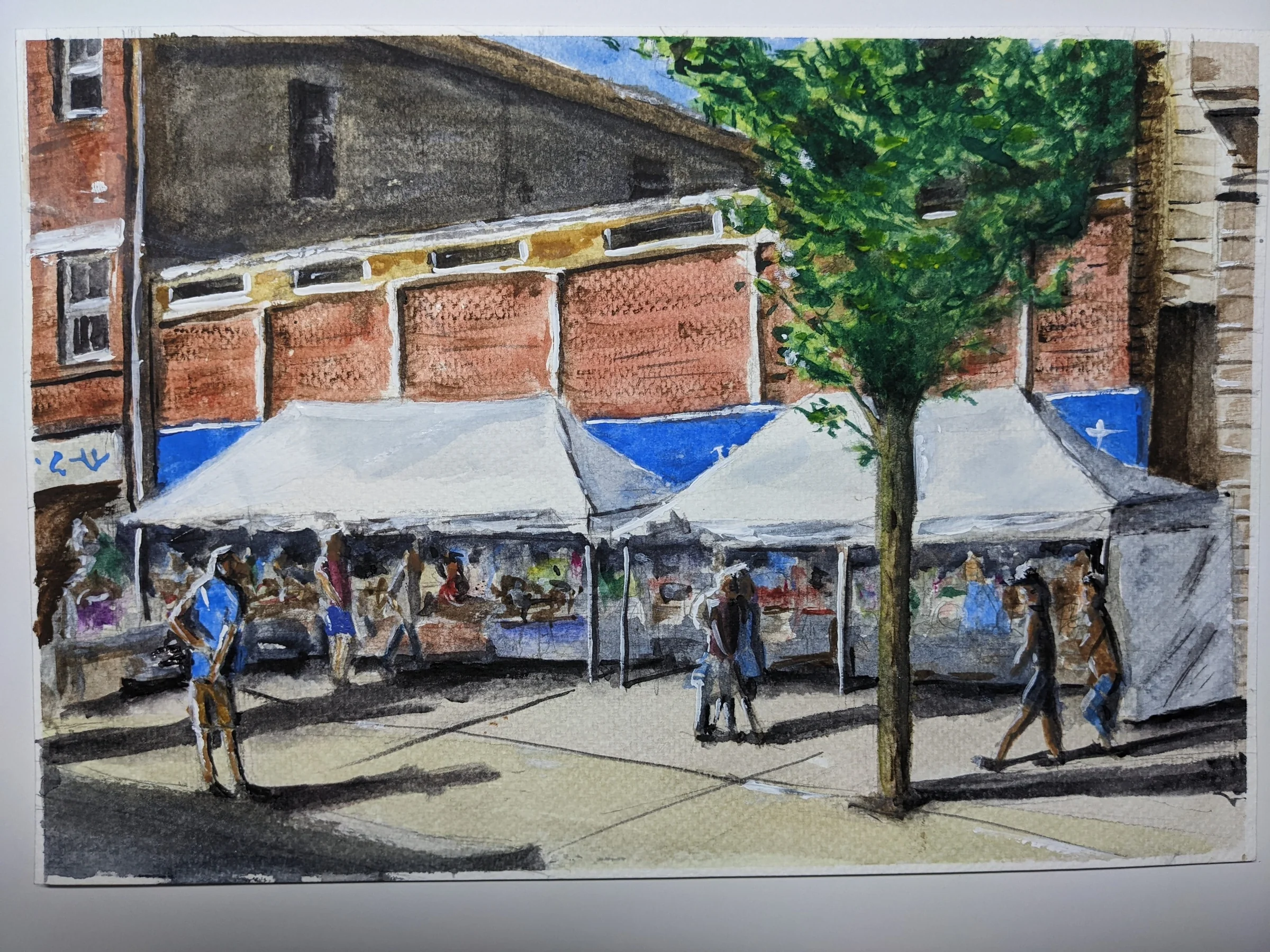
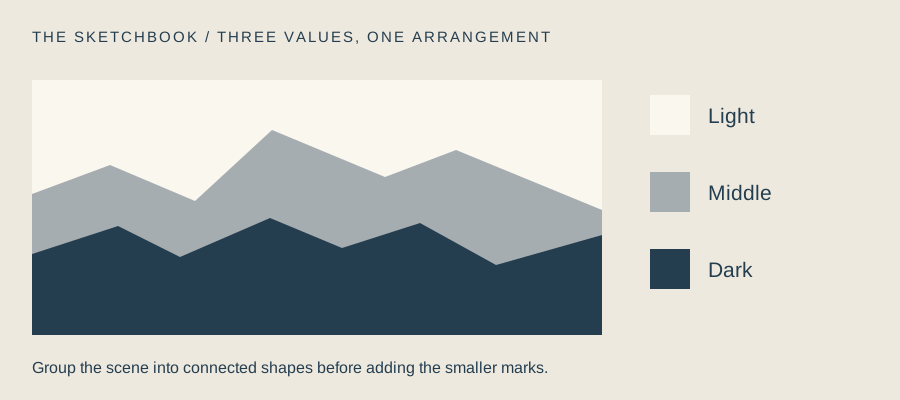
If the values are too similar, test a stronger dark on a separate thumbnail before adding it to the painting. If everything is sharp, decide whether one edge really needs softening, then trial the method on spare paper. If the composition has no clear light shape, a fresh small study may teach you more than trying to rebuild the current sheet from inside its own shadows.
Cropping is another option. Two pieces of plain card can hide a distracting margin without cutting anything. Move them around and see whether the painting becomes clearer. Keep the best arrangement in a photograph, then leave the original alone until you have looked again later.
Finally, write down one thing worth keeping: an edge, a wash, a colour relationship. An unsuccessful whole can contain a very useful fragment. Save it as evidence for the next painting. The next attempt is allowed to be smaller and simpler. Retirement from this particular sheet is an artistic decision, not a disciplinary hearing.
One diagnosis, one decision
- Put the painting upright and describe one specific problem.
- Try a crop or a value change on a thumbnail.
- Test any lifting on spare paper with the same colours.
- Make one justified change, or record the lesson and stop.
Make this a study of your own subject. These are our practice prompts, not a claim to reproduce an artist’s exact method.
Take a practice sheet →Keep looking
Sources support the factual context; looking notes and exercises are Watercolourist editorial interpretation.
What happened on your paper?
One useful observation beats “lovely work”. Show a study, ask about a decision, or tell us where you disagree.
Join the studio discussion